


Page 196 - GHES-2-1
P. 196
Global Health Econ Sustain                                            Antimicrobial resistance control model


                                                                                Clinical microbiology
            STANDARD PRECAUTIONS                                                laboratory assessment
             • Hand hygiene
             • Personal protective equipment (PPE)
             • Respiratory hygiene and cough etiquette
             • Injection and phlebotomy safety and sharps injury prevention
             • Safe decontamination and sterilization of medical equipment
             • Safe handling of linen and laundry
             • Environmental decontamination
             • Healthcare waste management                        Hospital       Expansive clinical   Infection
                                                                                                     prevention
            TRANSMISSION-BASED TRANSMISSION PRECAUTIONS         epidemiology   microbiologyapproaches  and control
             • Contact-based transmission precaution
             • Droplet transmission precaution
             • Air-borne transmission precaution
            COMMON CARE BUNDLES
             • Surgical-site infection prevention bundle
             • Ventilator-associated pneumonia prevention bundle
             • Catheter-associated urinary tract infection prevention bundle    Strategies of clinical
             • Central-line associated bloodstream infection prevention bundle    microbiology in
                                                                               antimicrobial stewardship
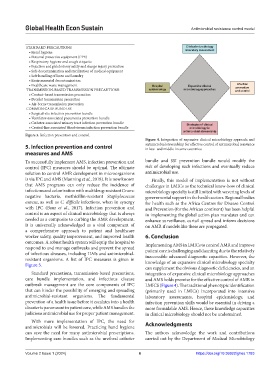
            Figure 3. Infection prevention and control.
                                                               Figure 4. Integration of expansive clinical microbiology approach and
            5. Infection prevention and control                antimicrobial stewardship for effective control of antimicrobial resistance
                                                               in low- and middle-income countries.
            measures and AMS
            To successfully implement AMS, infection prevention and   bundle and SSI prevention bundle would modify the
            control (IPC) measures should be optimal. The ultimate   risk of developing such infections and eventually reduce
            solution to control AMR development in microorganisms   antimicrobial use.
            is via IPC and AMS (Manning et al., 2018). It is now known   Finally, this model of implementation is not without
            that AMS programs can only reduce the incidence of   challenges in LMICs as the technical know-how of clinical
            infections and colonization with multidrug-resistant Gram-  microbiology specialty is still limited with wavering levels of
            negative  bacteria,  methicillin-resistant  Staphylococcus   governmental support in the health sectors. Regional bodies
            aureus, as well as C. difficile infections, when in synergy   for health such as the Africa Centres for Disease Control
            with IPC (Baur  et  al., 2017). Infection prevention and   and Prevention (for the African continent) has been helpful
            control is an aspect of clinical microbiology that is always   in implementing the global action plan mandates and can
            needed as a composite to curbing the AMR development.   enhance surveillance, curtail spread and inform decisions
            It is universally acknowledged as a vital component of   on AMR if models like these are propagated.
            a comprehensive approach to patient and healthcare
            worker safety, quality improvement, and improved health   6. Conclusion
            outcomes. A robust health system will equip the hospital to   Implementing AMS in LMICs to control AMR and improve
            respond to and manage outbreaks and prevent the spread   patient care is challenging and daunting due to the relatively
            of infectious diseases, including HAIs and antimicrobial-  inaccessible advanced diagnostic capacities. However, the
            resistant organisms. A  list of IPC measures is given in
            Figure 3.                                          knowledge of an expansive clinical microbiology specialty
                                                               can supplement the obvious diagnostic deficiencies, and an
              Standard precautions, transmission-based precautions,   integration of expansive clinical microbiology approaches
            care bundle implementation, and infectious disease   and AMS holds promise for the effective control of AMR in
            outbreak management are the core components of IPC   LMICS (Figure 4). The traditional phenotypic identification
            that can hinder the possibility of emerging and spreading   (primarily used in LMICs) incorporated into intensive
            antimicrobial-resistant organisms. The fundamental   laboratory assessments, hospital epidemiology, and
            prevention of a health issue before it escalates into a health   infection prevention skills would be essential in driving a
            disaster is paramount in patient care, while AMS handles the   more formidable AMS. Hence, these knowledge capacities
            judicious antimicrobial use for proper patient management.  in clinical microbiology should not be undermined.
              With more implementation of IPC, the need for
            antimicrobials will be lowered. Practicing hand hygiene   Acknowledgments
            can save the need for many antimicrobial prescriptions.   The authors acknowledge the work and contributions
            Implementing care bundles such as the urethral catheter   carried out by the Department of Medical Microbiology


            Volume 2 Issue 1 (2024)                         6                        https://doi.org/10.36922/ghes.1783

