


Page 25 - GHES-2-1
P. 25
Global Health Econ Sustain                                            Global South: Healthier lives with UVC


                                                                 Inadequate  WASH  conditions  further  exacerbate  the
                                                               consumption of contaminated drinking water and impair
                                                               the functionality of health-care facilities, schools, and
                                                               community hygiene and sanitation practices (Hutton &
                                                               Chase, 2017). Health-care facilities rely heavily on clean
                                                               water for critical tasks such as wastewater treatment,
                                                               waste management, handwashing, aseptic procedures,
                                                               clinic disinfection, and providing safe drinking water
                                                               for staff and patients during medication administration
                                                               and hydration (WHO & United Nations Children’s Fund
                                                               (UNICEF), 2019). Without clean water, health-care
                                                               facilities are limited in what procedures and services can
                                                               be safely offered, leading to dangerous conditions or long
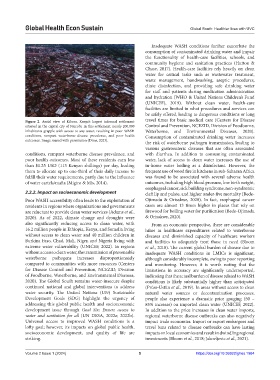
            Figure  2. Aerial view of Kibera, Kenya’s largest informal settlement   travel times for basic medical care (Centers for Disease
            situated in the capital city of Nairobi. In this settlement, nearly 200,000   Control and Prevention, NCEZID, Division of Foodborne,
            inhabitants grapple with access to any water, resulting in poor WASH   Waterborne, and Environmental  Diseases,  2020).
            conditions, rampant waterborne disease prevalence, and poor health   Consumption of contaminated drinking water increases
            outcomes. Image reused with permission (Dims, 2023).
                                                               the risk of waterborne pathogen transmission, leading to
                                                               various gastroenteric diseases that are often associated
            conditions,  rampant  waterborne  disease  prevalence,  and   with diarrhea. In addition to consuming contaminated
            poor health outcomes. Most of these residents earn less   water, lack of access to clean water increases the use of
            than $1.25 USD (113 Kenyan shillings) per day, leading   in-home water boiling as a disinfectant. However, the
            them to allocate up to one-third of their daily income to   frequent use of wood fire in kitchens in sub-Saharan Africa
            fulfill their water requirements, partly due to the influence   was found to be associated with several adverse health
            of water cartels/mafia (Migiro & Mis, 2014).       outcomes, including high blood pressure, low birth weight,
                                                               esophageal cancer, sick building syndrome, non-syndromic
            2.2.2. Impact on socioeconomic development         cleft lip and palate, and higher under-five mortality (Bede-
            Poor WASH accessibility often leads to the exploitation of   Ojimadu  &  Orisakwe,  2020).  In  fact,  esophageal  cancer
            residents in regions where organizations and governments   cases are almost 13  times higher in places that rely on
            are reluctant to provide clean water services (Adams et al.,   firewood for boiling water for purification (Bede-Ojimadu
            2020). As  of 2022,  climate  change and droughts  were   & Orisakwe, 2020).
            also significantly reducing access to clean water, with   From an economic perspective, there are considerable
            16.2 million people in Ethiopia, Kenya, and Somalia living   hikes  in healthcare expenditures related  to waterborne
            without access to clean water and 40 million children in   diseases and diminished capacity of healthcare workers
            Burkina Faso, Chad, Mali, Niger, and Nigeria living with   and facilities to adequately treat those in need (Bloom
            extreme water  vulnerability (UNICEF, 2022).  In regions   et al., 2018). The current global burden of disease due to
            without access to clean water, the transmission of preventable   inadequate  WASH  conditions  in LMICs  is  significant,
            waterborne  pathogens  increases  disproportionately  although considerably incomplete, owing to poor reporting
            compared to communities with more resources (Centers   and monitoring. However, it is worth noting that the
            for Disease Control and Prevention, NCEZID,  Division   limitations in accuracy are significantly underreported,
            of Foodborne, Waterborne, and Environmental Diseases,   indicating that the actual burden of disease related to WASH
            2020). The Global South remains water-insecure despite   conditions is likely substantially higher than anticipated
            continued national and global interventions to address   (Prüss-Ustün et al., 2019). In areas without access to clean
            water security. The United  Nations (UN) Sustainable   natural water sources or decontamination processes,
            Development  Goals  (SDG) highlight  the  urgency of   people also experience a dramatic price gouging (50 –
            addressing this global public health and socioeconomic   85% increase) on imported clean water (UNICEF, 2022).
            development issue through  Goal Six: Ensure access to   In addition to the price increases in clean water imports,
            water and sanitation for all (UN DESA, 2022a; 2022b).   regional waterborne disease outbreaks can also negatively
            Universal access to improved WASH conditions is a   impact trade economies. Import or export embargoes and
            lofty goal; however, its impacts on global public health,   travel bans related to disease outbreaks can have lasting
            socioeconomic development, and  quality of  life are   impacts on local economies and result in dwindling regional
            striking.                                          investments (Bloom et al., 2018; Jakovljevic et al., 2021).


            Volume 2 Issue 1 (2024)                         5                        https://doi.org/10.36922/ghes.1984

