


Page 117 - GHES-3-2
P. 117
Global Health Economics and
            Sustainability
                                                                     Hospitalizations due to obesity and deaths from diabetes


            Table 5. Spearman correlations between total hospital cost and obesity‑related hospital service costs by age group and sex from
            2013 to 2021
            Obesity hospitalization costs                        Total hospital costs
                                   15 – 19 y  20 – 29 y  30 – 39 y  40 – 49 y  50 – 59 y  60 – 69 y  >80 y  Male  Female
            15 – 19 y              0.000**   0.538    0.332     0.218    0.332    1.000   0.058  0.147  0.218
            20 – 29 y               0.538    0.000    0.099     0.125    0.798    0.539   0.127  0.013*  0.187
            30 – 39 y               0.332    0.050              0.002    0.265    0.673   0.127  0.036*  0.00**
            40 – 49 y               0.130    0.154     0.042*  0.00**    0.058    0.388   0.127  0.004  0.025
            50 – 59 y               0.332    0.831    0.265     0.187    0.00**   0.143   0.272  0.356  0.112
            60 – 69 y               1.000    0.507    0.673     0.604    0.143    0.00**  0.433  0.779  0.360
            >80 y                   0.058    0.127    0.127     0.127    0.272    0.433  0.00**  0.127  0.127
            Male                    0.147    0.007**  0.036*   0.002**   0.356    0.779   0.127  0.00**  0.050*
            Female                  0.218    0.125    0.00**   0.004**   0.112    0.360   0.127  0.050*  0.00**
            Notes: Non-parametric Spearman correlation performed by the authors. *The correlation is significant at the 0.05 level. **The correlation is significant
            at the 0.01 level.
            Abbreviation: y: Years.

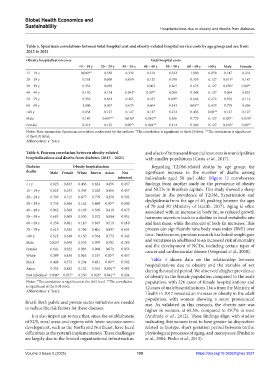
            Table 6. Pearson correlation between obesity‑related   and a lack of human and financial resources in municipalities
            hospitalizations and deaths from diabetes (2013 – 2021)  with smaller populations (Costa et al., 2017).

            Diabetes            Obesity hospitalization          Regarding T2DM-related deaths by age group, the
            deaths    Male  Female  White Brown  Asian  Not    significant increase in the number of deaths among
                                                   informed    individuals aged 50 and older (Figure  1) corroborates
            <1 y      0.825  0.633  0.456  0.624  0.456  0.457  findings from another study on the prevalence of obesity
            15 – 19 y  0.825  0.193  0.345  0.228  0.456  0.457  and NCDs in Brazilian capitals. This study showed a sharp
            20 – 29 y  0.703  0.715  0.677  0.779  0.259  0.593  increase in the prevalence of T2DM, hypertension and
            30 – 39 y  0.735  0.568  0.162  0.499  0.00**  0.800  dyslipidemia from the age of 40, peaking between the ages
                                                               of 70 and 80 (Ministry of Health, 2017). Aging is often
            40 – 49 y  0.962  0.560  0.169  0.569  0.419  0.875  associated with an increase in body fat, as reduced growth
            50 – 59 y  0.693  0.509  0.530  0.572  0.584  0.951  hormone secretion leads to a decline in basal metabolic rate
            60 – 69 y  0.258  0.881  0.110  0.835  0.510  0.168  and lean mass, while the amount of body fat increases. This
            70 – 79 y  0.615  0.383  0.796  0.401  0.897  0.603  process can significantly raise body mass index (BMI) over
            >80 y     0.525  0.340  0.150  0.364  0.773  0.342  time. Furthermore, previous research has linked weight gain
            Male      0.025*  0.098  0.576  0.079  0.782  0.283  and variations in adulthood to an increased risk of mortality
                                                               and the development of NCDs, including certain types of
            Female    0.641  0.922  0.993  0.908  0.071  0.953  cancer and cardiovascular disease (Vergnaud et al., 2008).
            White     0.389  0.438  0.083  0.337  0.00**  0.457
                                                                 Table  4 shows data on the relationship between
            Black     0.448  0.572  0.204  0.451  0.00**  0.582  hospitalizations due to obesity and the variable of sex
            Asian     0.352  0.482  0.102  0.363  0.001**  0.493  during the studied period. We observed a higher prevalence
            Not informed 0.046*  0.037*  0.230  0.028* 0.041**  0.104  of obesity in the female population compared to the male
            Notes: *The correlation is significant at the 0.05 level. **The correlation   population, with 226 cases of female hospitalizations and
            is significant at the 0.01 level.                  42 cases of male hospitalizations. Data from the Ministry of
            Abbreviation: y: Years.
                                                               Health in 2017 revealed an increase in obesity in the adult
                                                               population,  with women showing a  more  pronounced
            Brazil. Both public and private sector initiatives are needed   rise. As validated in this research, the obesity rate was
            to reduce the risk factors for these diseases.     higher in women, at 65.5%, compared to 29.7% in men
              It is also important to note that, since the establishment   (Andrade et al., 2012). These findings align with studies
            of SUS, rural areas and regions with lower socioeconomic   indicating that women tend to have greater fat disposition
            development, such as the North and Northeast, have faced   related to biotype, short gestation period between births,
            difficulties in the system’s implementation. These challenges   physiological processes of aging, and menopause (Pinheiro
            are largely due to the limited organizational infrastructure   et al., 2004; Pinho et al., 2013).


            Volume 3 Issue 2 (2025)                        109                       https://doi.org/10.36922/ghes.3027

