


Page 184 - GHES-3-3
P. 184
Global Health Economics and
            Sustainability
                                                                                Transport and health of pregnant women


            cars and commercial buses, respectively. However,   chose private cars constitute 11.8%, 9.8%, and 11.2% from
            disaggregated results of respondents show that 28.9% of   Ibadan Northwest, Ibadan North, and Ibadan Northeast,
            the respondents who prefer motorcycles are from Ibadan   respectively. However, 19.6%, 24.4%, and 28.9% from
            Northwest, 27.5% are from Ibadan North, and 33.9% are   Ibadan Northwest, Ibadan North, and Ibadan Northeast,
            from Ibadan Northeast. 22.4%, 21.0%, and 26.9% of those   respectively,  chose  commercial  cars,  while  commercial
            who  chose  tricycles  are  from  Ibadan  Northwest,  Ibadan   buses were preferred by 4.5%, 14.0%, and 5.6% of
            North, and Ibadan Northeast, respectively. Those who   respondents from these areas, respectively. Those who
                                                               prefer walking constitute 25.5%, 22.1%, and 30.8% of
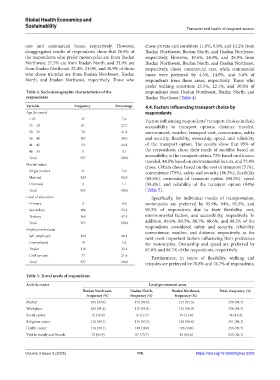
            Table 2. Sociodemographic characteristics of the   respondents from Ibadan Northwest, Ibadan North, and
            respondents                                        Ibadan Northeast (Table 4).
            Variable             Frequency        Percentage   4.4. Factors influencing transport choice by
            Age (in years)                                     respondents
             < 25                   27               7.6
                                                               Factors influencing respondents’ transport choices include
             25 – 29                81               22.7      accessibility to transport options, distance traveled,
             30 – 35                78               21.8      environment, weather, transport cost, convenience, safety
             36 – 40               107               30.0      and security, flexibility, ownership, speed, and reliability
             41 – 45                53               14.8      of  the  transport  option.  The  results  show  that  95%  of
             46 – 55                11               3.1       the respondents chose their mode of mobility based on
             Total                 357              100.0      accessibility to the transport option, 72% based on distance
            Marital status                                     traveled, 44.8% based on environmental factors, and 73.9%
                                                               chose. Others chose based on the cost of transport (51%),
             Single mother          21               5.9       convenience (79%), safety and security (86.3%), flexibility
             Married               332               93.0      (68.6%), ownership of transport option (60.2%), speed
             Divorced               4                1.1       (58.8%), and reliability of the transport option (84%)
             Total                 357              100.0      (Table 5).
            Level of education                                   Specifically,  for  individual  modes  of  transportation,
             Primary                3                0.8       motorcycles are preferred by 95.9%, 94%, 92.5%, and
             Secondary             186               52.1      90.3% of respondents due to their flexibility, cost,
             Tertiary              168               47.1      environmental factors, and accessibility, respectively. In
             Total                 357              100.0      addition, 89.6%, 89.3%, 88.7%, 88.6%, and 88.3% of the
            Employment status                                  respondents considered safety and security, reliability,
                                                               convenience, weather, and distance, respectively, as the
             Self-employed         143               40.1      next most important factors influencing their preference
             Unemployed             19               5.3       for motorcycles. Ownership and speed are preferred by
             Trader                118               33.1      87.0% and 86.7% of the respondents, respectively.
             Civil servant          77               21.6
                                                                 Furthermore, in terms of flexibility, walking and
             Total                 357              100.0      tricycles are preferred by 78.8% and 76.7% of respondents,

            Table 3. Travel needs of respondents

            Activity center                                     Local government areas
                                    Ibadan Northwest,   Ibadan North,     Ibadan Northeast,   Total, frequency (%)
                                      frequency (%)      frequency (%)     frequency (%)
            Market                      105 (94.6)        112 (94.9)         121 (94.5)           338 (94.7)
            Workplace                   102 (91.9)        112 (94.9)         124 (96.9)           338 (94.7)
            Social center               12 (10.8)          15 (12.7)         19 (14.8)            46 (12.9)
            Religious center            110 (99.1)        115 (97.5)         126 (98.4)           351 (98.3)
            Health center               110 (99.1)        118 (100)          128 (100)            356 (99.7)
            Visit to family and friends  72 (64.9)         87 (73.7)         84 (65.6)            243 (68.1)


            Volume 3 Issue 3 (2025)                        176                       https://doi.org/10.36922/ghes.5203

