


Page 104 - GPD-2-1
P. 104
Gene & Protein in Disease                                              SCN7A is a protective factor in LUAD


                          A                                        B


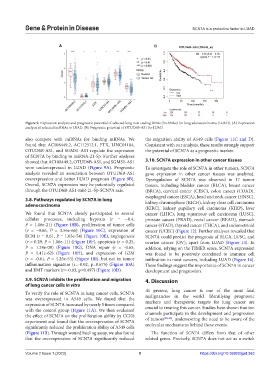
            Figure 9. Expression analysis and prognostic potential of selected long non-coding RNAs (lncRNAs) for lung adenocarcinoma (LUAD). (A) Expression
            analysis of selected lncRNAs in LUAD. (B) Prognostic potential of OTUD6B-AS1 for LUAD.

            also  compete  with  miRNAs  for  binding  mRNAs.  We   the migration ability of A549  cells (Figure  11C  and  D).
            found that AC108449.2, AC112512.1, FTX, LINC01184,   Consistent with our analysis, these results strongly support
            OTUD6B-AS1, and SGMS1-AS1 regulate the expression   the potential of SCN7A as a prognostic marker.
            of SCN7A by binding to miRNA-21-5p. Further analyses
            showed that AC108449.2, OTUD6B-AS1, and SGMS1-AS1   3.10. SCN7A expression in other cancer tissues
            were  underexpressed in  LUAD (Figure  9A).  Prognostic   To investigate the role of SCN7A in other tumors, SCN7A
            analysis revealed an association between OTUD6B-AS1   gene expression in other cancer tissues was analyzed.
            overexpression and  better  LUAD  prognosis  (Figure  9B).   Dysregulation of SCN7A was observed in 17 tumor
            Overall, SCN7A expression may be potentially regulated   tissues,  including  bladder  cancer  (BLCA),  breast cancer
            through the OTUD6B-AS1-miR-21-5p-SCN7A axis.       (BRCA), cervical cancer (CESC), colon cancer (COAD),
                                                               esophageal cancer (ESCA), head and neck cancer (HNSC),
            3.8. Pathways regulated by SCN7A in lung           kidney chromophore (KICH), kidney clear cell carcinoma
            adenocarcinoma
                                                               (KIRC), kidney papillary cell carcinoma (KIRP), liver
            We found that SCN7A closely participated in several   cancer (LIHC), lung squamous cell carcinoma (LUSC),
            cellular processes, including hypoxia (r = −0.4,   prostate cancer (PRAD), rectal cancer (READ), stomach
            P  = 1.06e-21) (Figure  10B), proliferation of tumor cells   cancer (STAD), thyroid cancer (THCA), and endometrioid
            (r  =  −0.66,  P  =  3.56e-66) (Figure  10C), expression of   cancer (UCEC) (Figure 12). Further analyses revealed that
            ECM (r = 0.61, P = 1.63e-54) (Figure 10E), angiogenesis   SCN7A could predict the prognosis of BLCA, LUSC, and
            (r = 0.29, P = 1.06e-11) (Figure 10F), apoptosis (r = 0.25,   ovarian cancer (OV), apart from LUAD (Figure  13). In
            P  = 1.24e-08) (Figure  10G), DNA repair (r =  -0.65,   addition, relying on the TIMER score, SCN7A expression
            P  =  1.41e-62) (Figure  10H), and expression of G2M   was found to be positively correlated to immune cell
            (r = -0.61, P = 4.25e-54) (Figure 10I). but not in tumor   infiltration in most cancers, including LUAD (Figure 14).
            inflammation signature (r=-0.02, p=0.675) (Figure  10A)   These findings suggest the importance of SCN7A in cancer
            and EMT markers (r=-0.03, p=0.497) (Figure 10D).   development and progression.
            3.9. SCN7A inhibits the proliferation and migration   4. Discussion
            of lung cancer cells in vitro
            To verify the role of SCN7A in lung cancer cells, SCN7A   At present, lung cancer is one of the most fatal
            was  overexpressed in  A549  cells.  We  found that the   malignancies in the world. Identifying prognostic
            expression of SCN7A increased by nearly 5 times compared   markers and therapeutic targets for lung cancer are
            with the control group (Figure 11A). We then evaluated   crucial to treating this cancer. Studies have shown that ion
                                                               channels participate in the development and progression
            the effect of SCN7A on the proliferation ability by CCK8   of tumors [22-25] , underscoring the need to be aware of the
            experiment and found that the overexpression of SCN7A
            significantly reduced the proliferation ability of A549 cells   molecular mechanisms behind these events.
            (Figure 11B). Through wound healing assay, we also found   The function of  SCN7A differs from that of other
            that the overexpression of SCN7A significantly reduced   related genes. Precisely, SCN7A does not act as a switch


            Volume 2 Issue 1 (2023)                         9                         https://doi.org/10.36922/gpd.363

