


Page 9 - GPD-2-2
P. 9
Gene & Protein in Disease                                                              MOR in cancer


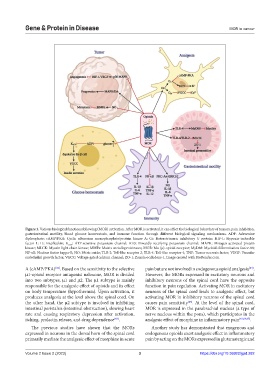
            Figure 1. Various biological functions following (MOR) activation. After MOR is activated, it can affect the biological behaviors of tumors, pain inhibition,
            gastrointestinal motility, blood glucose homeostasis, and immune function through different biological signaling mechanisms. ADP: Adenosine
            diphosphate; cAMP/PKA: Cyclic adenosine monophosphate/protein kinase A; Gi: Heterotrimeric inhibitory G protein; HIF-1: Hypoxia-inducible
            factor 1; IL: Interleukin; K ATP : ATP-sensitive potassium channel; Kir3: Inwardly-rectifying potassium channel; MAPK: Mitogen-activated protein
            kinase; MLCK: Myosin light chain kinase; MMPs: Matrix metalloproteinases; MOR: Mu (µ)-opioid receptor; MyD88: Myeloid differentiation factor-88;
            NF-κB: Nuclear factor kappa-B; NO: Nitric oxide; TLR-2: Toll-like receptor 2; TLR-4: Toll-like receptor 4; TNF: Tumor necrosis factor; VEGF: Vascular
            endothelial growth factor; VGCC: Voltage-gated calcium channel; ZO-1: Zonula occludens-1. Image created with BioRender.com.

            A (cAMP/PKA) . Based on the sensitivity to the selective   pain but are not involved in endogenous opioid analgesia .
                         [62]
                                                                                                           [64]
            µ1-opioid receptor antagonist naloxone, MOR is divided   However, the MORs expressed in excitatory neurons and
            into two subtypes, µ1 and µ2. The µ1 subtype is mainly   inhibitory neurons of the spinal cord have the opposite
            responsible for the analgesic effect of opioids and its effect   function in pain regulation. Activating MOR in excitatory
            on body temperature (hypothermia). Upon activation, it   neurons of the spinal cord leads to analgesic effect, but
            produces analgesia at the level above the spinal cord. On   activating MOR in inhibitory neurons of the spinal cord
            the other hand, the µ2 subtype is involved in inhibiting   causes pain sensitivity . At the level of the spinal cord,
                                                                                 [65]
            intestinal peristalsis (intestinal obstruction), slowing heart   MOR is expressed in the parabrachial nucleus (a type of
            rate and causing respiratory depression after activation,   nerve nucleus within the pons), which participates in the
            itching, prolactin release, and drug dependence .  analgesic effect of morphine in inflammatory pain [61,64,65] .
                                                  [63]
              The previous studies have shown that the MORs      Another study has demonstrated that exogenous and
            expressed in neurons in the dorsal horn of the spinal cord   endogenous opioids exert analgesic effect in inflammatory
            primarily mediate the analgesic effect of morphine in acute   pain by acting on the MORs expressed in glutamatergic and


            Volume 2 Issue 2 (2023)                         3                         https://doi.org/10.36922/gpd.282

