


Page 10 - GPD-2-2
P. 10
Gene & Protein in Disease                                                              MOR in cancer


                                                               exert analgesic effect through different targets and
                                                               mechanisms.
                                                               2.3. Tumor

                                                               MOR can be expressed in many different cancer cells,
                                                               including BC , non-small cell lung cancer (NSCLC) ,
                                                                                                           [70]
                                                                          [69]
                                                                   [71]
                                                               CRC , and hepatocellular carcinoma (HCC) [56,72] . In 1989,
                                                                         [73]
                                                               Scopsi et al.  was the first to propose that endogenous
                                                               opioid  peptides  may  be  related  to  cancer  progression.
                                                               Thereafter, many reports have indicated that the activation
                                                               of MOR may be involved in malignant progression of
                                                               tumors, which is supported by the evidence that MOR
                                                               may affect the growth of CRC cells  and the prognosis
                                                                                            [71]
                                                               of patients with liver and laryngeal cancer (Figure 3) [55,56] .
                                                               Therefore, MOR may be used as a new biomarker for
                                                               tumors and concerned as a new target in cancer treatment.
                                                                 MOR expression level appears to be associated
                                                               with cancer prognosis; a high expression promotes cell
                                                               proliferation, adhesion, migration, and tumorigenesis,
                                                               while an inhibited expression delays the development of
                                                               CRC tumors [71] . The µ-opioid receptor gene OPRM1 is a
                                                               gene that encodes MOR. The genetic polymorphisms of
                                                               OPRM1 (A118G) are associated with tumorigenesis. It
                                                               has been reported that the G allele of A118G is highly
                                                               associated with BC in white people, and people with
                                                               G alleles are three times more likely to be diagnosed
                                                               with BC. In addition, BC patients with G alleles have
                                                               lower specific mortality [74] . Compared with the G/G
                                                               genotype, the A/A genotype has significantly higher
                                                               risk of esophageal squamous cell carcinoma (ESCC) [75] .
                                                               Similar studies have shown that the A allele increases
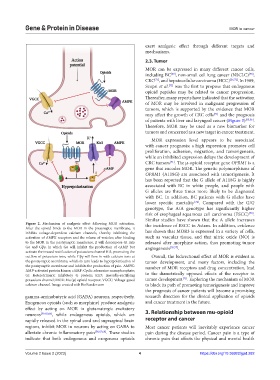
            Figure  2. Mechanism of analgesic effect following MOR activation.   the incidence of ESCC in Asians. In addition, evidence
            After the opioid binds to the MOR in the presynaptic membrane, it
            inhibits voltage-dependent calcium channels, thereby inhibiting the   has shown that MOR3 is expressed in a variety of cells,
            activation of AMPK receptors and the release of vesicles; after binding   such as vascular tissue, and that nitric oxide (NO) is
            to the MOR in the postsynaptic membrane, it will decompose Gi into   released after morphine action, thus promoting tumor
            Gα and Gβγ, in which Gα will inhibit the production of cAMP but   angiogenesis [76,77] .
            activate the inward rectification of potassium channel Ki3, promoting the
            outflow of potassium ions, while Gβγ will flow in with calcium ions at   Overall, the bidirectional effect of MOR is evident in
            the postsynaptic membrane, which in turn leads to hyperpolarization of   tumor development, and many factors, including the
            the postsynaptic membrane and inhibits the production of pain. AMPK:   number of MOR receptors and drug concentration, lead
            AMP-activated protein kinase; cAMP: Cyclic adenosine monophosphate;
            Gi: Heterotrimeric inhibitory G protein; Kir3: Inwardly-rectifying   to the diametrically opposed effects of the receptor in
                                                                               [71]
            potassium channel; MOR: Mu (µ)-opioid receptor; VGCC: Voltage-gated   tumor development . Exploring the mechanism of MOR
            calcium channel. Image created with BioRender.com  to block its path of promoting tumorigenesis and improve
                                                               the prognosis of cancer patients will become a promising
            gamma-aminobutyric acid (GABA) neurons, respectively.   research direction for the clinical application of opioids
            Exogenous opioids (such as morphine) produce analgesic   and cancer treatment in the future.
            effect  by  acting  on  MOR  in  glutamatergic  excitatory
            neurons [59,65,66] , while endogenous opioids, which are   3. Relationship between mu-opioid
            rapidly released in the spinal cord and supraspinal brain   receptor and cancer
            regions, inhibit MOR in neurons by acting on GABA to   Most  cancer  patients will  inevitably  experience cancer
            alleviate chronic inflammatory pain [58,67,68] . These studies   pain during the disease period. Cancer pain is a type of
            indicate that both endogenous and exogenous opioids   chronic pain that affects the physical and mental health


            Volume 2 Issue 2 (2023)                         4                         https://doi.org/10.36922/gpd.282

