


Page 11 - GPD-2-2
P. 11
Gene & Protein in Disease                                                              MOR in cancer


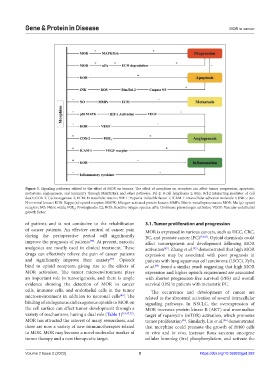
            Figure 3. Signaling pathways related to the effect of MOR on tumors. The effect of morphine on receptors can affect tumor progression, apoptosis,
            metastasis, angiogenesis, and immunity through MAPK/Erk and other pathways. Bcl-2: B-cell lymphoma 2; Bim: Bcl-2 interacting mediator of cell
            death; COX-2: Cyclooxygenase-2; ECM: Extracellular matrix; HIF-1: Hypoxia-inducible factor 1; ICAM-1: Intercellular adhesion molecule 1; JNK: c-Jun
            N-terminal kinase; KOR: Kappa (κ)-opioid receptor; MAPK: Mitogen-activated protein kinase; MMPs: Matrix metalloproteinases; MOR: Mu (µ)-opioid
            receptor; NO: Nitric oxide; PGE : Prostaglandin E2; ROS: Reactive oxygen species; uPA: Urokinase plasminogen activator; VEGF: Vascular endothelial
                                 2
            growth factor.

            of patients and is not conducive to the rehabilitation   3.1. Tumor proliferation and progression
            of cancer patients. An effective control of cancer pain   MOR is expressed in various cancers, such as HCC, CRC,
            during the perioperative period will significantly   BC, and prostate cancer (PC) [81,82] . Opioid chemicals could
            improve the prognosis of patients . At present, narcotic   affect tumorigenesis and development following MOR
                                       [78]
            analgesics are mostly used in clinical treatment. These   activation . Zhang et al.  demonstrated that high MOR
                                                                                   [55]
                                                                       [83]
            drugs can effectively relieve the pain of cancer patients   expression may be associated with poor prognosis in
            and significantly improve their anxiety . Opioids   patients with lung squamous cell carcinoma (LSCC). Zylla
                                                [79]
            bind to opioid receptors, giving rise to the effects of   et al.  found a similar result suggesting that high MOR
                                                                   [84]
            MOR  activation.  The  tumor  microenvironment  plays   expression and higher opioids requirement are associated
            an important role in tumorigenesis, and there is ample   with shorter progression-free survival (PFS) and overall
            evidence showing the detection of MOR in cancer    survival (OS) in patients with metastatic PC.
            cells, immune cells, and endothelial cells in the tumor   The occurrence and development of cancer are
            microenvironment in addition to neuronal cells . The   related to the abnormal activation of several intracellular
                                                    [80]
            binding of endogenous and exogenous opioids to MOR on   signaling pathways. In NSCLC, the overexpression of
            the cell surface can affect tumor development through a   MOR increases protein kinase B (AKT) and mammalian
            variety of mechanisms, having a dual role (Table 1) [18,47,72] .   target of rapamycin (mTOR) activation, which promotes
            MOR has attracted the interest of many researchers, and   tumor proliferation . Similarly, Liu et al.  demonstrated
                                                                              [85]
                                                                                                [86]
            there are now a variety of new immunotherapies related   that morphine could promote the growth of H460  cells
            to MOR. MOR may become a novel molecular marker of   in  vitro and  in  vivo, increase Rous sarcoma oncogene
            tumor therapy and a new therapeutic target.        cellular homolog (Src) phosphorylation, and activate the


            Volume 2 Issue 2 (2023)                         5                         https://doi.org/10.36922/gpd.282

