


Page 16 - GPD-2-2
P. 16
Gene & Protein in Disease                                                              MOR in cancer


              The in vitro use of morphine in the treatment of Lewis   cells as well as inhibiting the production of blood
            lung carcinoma cells (LLC) has been demonstrated to inhibit   vessels . Interestingly, another study has shown that the
                                                                    [96]
            the nuclear translocation of HIF-1α and post-translational   activation of MOR on the surface of vascular endothelial
            modification/phosphorylation of HIF-1α by inhibiting   cells could induce the production of NO  by increasing
                                                                                                [97]
            the hypoxia-induced mitochondrial p38 MAPK pathway,   intracellular calcium concentration, which can promote
            thus reducing the transcription and secretion of VEGF .   the proliferation and migration of vascular endothelial cells
                                                        [92]
            Therefore, angiogenesis in LCC could be inhibited by   and increase their permeability. NO participates in tumor
            blocking the HIF-1α/p38 MAPK pathway following MOR   angiogenesis by endothelial constitutive NO synthetase
            activation. Interestingly, Singleton et al.  found contrary   (ec-NOS) activation, cyclic guanosine monophosphate
                                            [93]
            results showing a significantly higher expression of MOR   (cGMP) elevation, MAPK activation, and fibroblast growth
            in lung cancer samples than in adjacent control tissues and   factor 2 (FGF-2) expression (Figure 7) .
                                                                                             [98]
            that the effect of MOR on tumorigenesis might be due to   Therefore,  by  exploring  the  effect  of  MOR  activation
            increased VEGF expression (Figure 6). Similar results have   on tumor angiogenesis, it may be possible to use MOR
            been observed in a study of breast cancer patients, whereby   as the target to achieve the purpose of treating tumors by
            morphine induced metastasis formation by upregulation   activating/inhibiting angiogenesis of certain cancer cells.
            of urokinase plasminogen activator (uPA) expression
            and induced angiogenesis and tumor progression by   3.3. Tumor immunity
            transactivation of VEGF receptor .                 The tumor microenvironment (TME) plays a very important
                                      [94]
                                                        [95]
              NO plays a very important role in tumor angiogenesis .   role in the occurrence and development of cancer [99,100] .
            Research results have suggested that morphine can reduce   In the tumor microenvironment, activated inflammatory
            mitochondrial membrane potential by binding to MOR   cells release multiple inflammatory mediators and
            on vascular endothelial cells, promoting the production of   molecules, such as interleukin-2 (IL-2), IL-6, and tumor
            NO, stimulating the expression of pro-apoptotic factors Bak   necrosis factor alpha (TNF-α), transforming the tumor
            and Bax, thereby activating caspase-3 and caspase-7, and   microenvironment into an environment that is more
            ultimately inducing the apoptosis of vascular endothelial   suitable  for  cancer  cell  survival [101] .  Opioids  have  a  dual


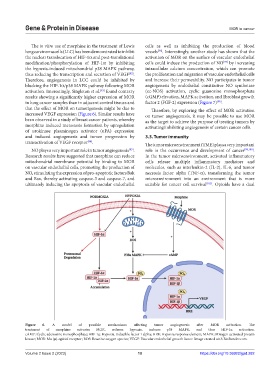
            Figure   6.  A  model  of  possible  mechanisms  affecting  tumor  angiogenesis  after  MOR  activation.  The
            treatment  of  morphine  activates  MOR,  reduces  hypoxia,  induces  p38  MAPK,  and  thus  HIF-1α  activation.
            cAMP: Cyclic adenosine monophosphate; HIF-1α: Hypoxia-inducible factor 1 alpha; HRE: Hypoxia response element; MAPK: Mitogen-activated protein
            kinase; MOR: Mu (µ)-opioid receptor; ROS: Reactive oxygen species; VEGF: Vascular endothelial growth factor. Image created with BioRender.com.


            Volume 2 Issue 2 (2023)                         10                        https://doi.org/10.36922/gpd.282

