


Page 17 - GPD-2-2
P. 17
Gene & Protein in Disease                                                              MOR in cancer


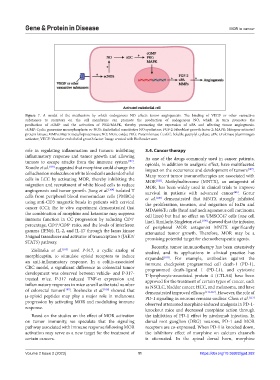
            Figure  7. A model of the mechanism by which endogenous NO affects tumor angiogenesis. The binding of VEGF or other vasoactive
            substances  to  receptors on  the  cell  membrane can  promote  the  production  of endogenous NO,  which  in  turn  promotes  the
            production of cGMP and the activation of PKG/MAPK, thereby promoting the expression of uPA and affecting tumor angiogenesis.
            cGMP: Cyclic guanosine monophosphate; ec-NOS: Endothelial constitutive NO synthetase; FGF-2: Fibroblast growth factor 2; MAPK: Mitogen-activated
            protein kinase; MMPs: Matrix metalloproteinases; NO: Nitric oxide; PKG: Protein kinase G; sGC: Soluble guanylyl cyclase; uPA: Urokinase plasminogen
            activator; VEGF: Vascular endothelial growth factor. Image created with BioRender.com.

            role in regulating inflammation and tumors: inhibiting   3.4. Cancer therapy
            inflammatory response and tumor growth and allowing   As one of the drugs commonly used in cancer patients,
            tumors to escape attacks from the immune system [102] .   opioids, in addition to analgesic effect, have multifaceted
            Koodie et al. [103]  suggested that morphine could change the   impact on the occurrence and development of tumors [107] .
            cell adhesion molecules on white blood cells and endothelial   Many recent tumor immunotherapies are associated with
            cells in LCC by activating MOR, thereby inhibiting the   MOR [102] . Methylnaltrexone (MNTX), an antagonist of
            migration and recruitment of white blood cells to reduce   MOR, has been widely used in clinical trials to improve
            angiogenesis and tumor growth. Jiang et al. [104]  isolated T   survival in patients with advanced cancer . Gorur
                                                                                                     [46]
            cells from peripheral blood mononuclear cells (PMBCs)   et al. [108]  demonstrated that MNTX strongly inhibited
            using anti-CD3 magnetic beads in patients with cervical   the  proliferation,  invasion,  and  migration  of  FaDu  and
            cancer (CC); the  in vitro experiment demonstrated that   MDA686Tu cells (head and neck squamous cell carcinoma
            the combination of morphine and ketamine may suppress   cell lines) but had no effect on UMSCC47 cells (one cell
            immune  function  in  CC  progression  by  reducing  CD4    line). Similarly, Singleton et al. [109]  showed that the infusion
                                                          +
            percentage, CD4 /CD8  ratio, and the levels of interferon   of peripheral MOR antagonist MNTX significantly
                              +
                         +
            gamma (IFNγ), IL-2, and IL-17 through the Janus kinase   attenuated tumor growth. Therefore, MOR may be a
            3/signal transducer and activator of transcription 5 (JAK3/  promising potential target for chemotherapeutic agents.
            STAT5) pathway.
                                                                 Recently, tumor immunotherapy has been extensively
              Zielinska  et al. [105]  used P-317, a cyclic analog of   studied, and its applications in clinical practice has
            morphiceptin, to stimulate opioid receptors to induce   expanded [110] . For example, antibodies against the
            an anti-inflammatory response. In a colitis-associated   immune checkpoint programmed cell death-1 (PD-1),
            CRC model, a significant difference in colorectal tumor   programmed death-ligand 1 (PD-L1), and cytotoxic
            development was  observed  between vehicle-  and  P-317-  T-lymphocyte-associated  protein  4  (CTLA4)  have  been
            treated mice. P-317 reduced TNF-α expression and   approved for the treatment of certain types of cancer, such
            inflammatory responses in mice as well as the total number   as NSCLC, bladder cancer, HCC, and melanoma, and have
            of colorectal tumors [105] . Boehncke  et al. [106]  showed that   demonstrated improved efficacy [111,112] . However, the role of
            µ-opioid  peptides  may  play  a  major  role  in  melanoma   PD-1 signaling in neurons remains unclear. Chen et al. [113]
            progression by activating MOR and modulating immune   observed attenuated morphine-induced analgesia in PD-1-
            response.                                          knockout mice and decreased morphine action through
              Based on the studies on the effect of MOR activation   the inhibition of PD-1 effect by nivolumab injection. In
            on tumor immunity, we speculate that the signaling   dorsal root ganglion (DRG) neurons, PD-1 and MOR
            pathway associated with immune response following MOR   receptors are co-expressed. When PD-1 is knocked down,
            activation may serve as a new target for the treatment of   the inhibitory effect of morphine on calcium channels
            certain cancers.                                   is attenuated. In the spinal dorsal horn, morphine


            Volume 2 Issue 2 (2023)                         11                        https://doi.org/10.36922/gpd.282

