


Page 104 - GPD-3-3
P. 104
Gene & Protein in Disease                                     Exploring serum inflammatory biomarkers in GBM


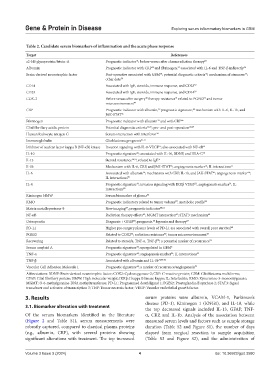
            Table 2. Candidate serum biomarkers of inflammation and the acute phase response
            Target                                                        References
            a2-HS glycoprotein/fetuin-A       Prognostic indicator ; before versus after chemoradiation therapy 24
                                                           31
            Albumin                           Prognostic indicator with CRP  and fibrinogen,  associated with IL-6 and TNF-β indirectly 34
                                                                             33
                                                                  32
            Brain-derived neurotrophic factor  Post-operative associated with GBM ; potential diagnostic criteria ; mechanism of stemness ;
                                                                                        36
                                                                     35
                                                                                                         37
                                              other data 38
            CD14                              Associated with IgE, steroids, immune response, and CD23 39
            CD23                              Associated with IgE, steroids, immune response, and CD14 39
            COX-2                             Before versus after surgery  therapy resistance  related to PGES2  and tumor
                                                                                        42
                                                                            41
                                                               40
                                              microenvironment 43
            CRP                               Prognostic indicator with albumin,  prognostic signature,  mechanism with IL-6, IL-1b, and
                                                                    32
                                                                                   44
                                              JAK-STAT 45
            Fibrinogen                        Prognostic indicator with albumin  and with CRP 46
                                                                    33
            Glial fibrillary acidic protein   Potential diagnostic criteria 36,47 ; pre- and post-operation 48,49
            Human leukocyte antigen G         Serum interaction with interferon 50
            Immunoglobulin                    Glioblastoma prognosis 41,51
            Inhibitor of nuclear factor kappa B (NF-κB) kinase  Invasion signaling with IL-8-VEGF ; also associated with NF-κB 52
                                                                    52
            IL-10                             Prognostic signature ; associated with IL-10, BDNF, and HLA-G 38
                                                           44
            Il-13                             Steroid resistance 38,53 ; related to IgE 51
                                                                          45
            Il-1b                             Mechanism with IL-6, CRP, and JAK-STAT ; angiogenesis marker ; IL interactions 55
                                                                                        54
            IL-6                              Associated with albumin ; mechanism with CRP, IL-1b, and JAK-STAT ; angiogenesis marker ;
                                                                                            45
                                                                                                          54
                                                              34
                                              IL interactions 55
            IL-8                              Prognostic signature ; invasion signaling with IKKβ VEGF , angiogenesis marker ; IL
                                                                                    52
                                                                                                  54
                                                           44
                                              interactions 55
            Kininogen HMW                     Serum biomarker of glioma 56
            KMO                               Prognostic indicatory related to tumor volume ; metabolic profile 58
                                                                            57
            Matrix metalloprotease-9          New imaging ; prognostic indicator 60,61
                                                      59
                                                              62
                                                                            63
            NF-κB                             Radiation therapy effects ; MGMT interaction ; STAT3 mechanism 64
            Osteopontin                       Diagnosis + GFAP ; prognosis,  hypoxia and therapy 67
                                                                  66
                                                          65
            PD-L1                             Higher pre-surgery plasma levels of PD-L1 are associated with overall poor survival 68
            PGES2                             Related to COX2 ; radiation resistance ; tumor microenvironment 43
                                                         42
                                                                       69
            Recovering                        Related to steroids, TNF-α, TNF-β ; a potential marker of recurrence 71
                                                                    70
                                                           44
            Serum amyloid A                   Prognostic signature ; upregulated in GBM 6
            TNF-α                             Prognostic signature ; angiogenesis marker ; IL interactions 55
                                                                          54
                                                           44
            TNF-β                             Associated with albumin and IL-1b 34,54,72
            Vascular Cell Adhesion Molecule 1  Prognostic signature ; a marker of recurrence/angiogenesis 73
                                                           44
            Abbreviations: BDNF: Brain-derived neurotrophic factor; COX2: Cyclooxygenase-2; CRP: C-reactive protein; GBM: Glioblastoma multiforme;
            GFAP: Glial fibrillary protein; HMW: High molecular weight; IKKβ: I kappa B kinase kappa; IL: Interleukin; KMO: Kynurenine-3-monooxygenase;
            MGMT: O-6-methylguanine-DNA methyltransferase; PD-L1: Programmed death ligand 1; PGES2: Prostaglandin E synthase 2; STAT3: Signal
            transducer and activator of transcription 3; TNF: Tumor necrosis factor; VEGF: Vascular endothelial growth factor.
            3. Results                                         serum proteins were albumin, VCAM-1, Parkinson’s
                                                               disease  (PD-1),  Kininogen  1  (KNG1),  and  IL-10,  while
            3.1. Biomarker alteration with treatment           the top decreased signals included IL-13, GFAP, TNF-
            Of the serum biomarkers identified in the literature   α, CRP, and IL-1b. Analysis of the association between
            (Figure  2  and  Table S1), serum measurements were   measured serum levels and factors such as sample storage
            robustly captured, compared to classical plasma proteins   duration (Table S2 and  Figure S1), the number of days
            (e.g., albumin, CRP), with several proteins showing   elapsed from surgical resection to sample acquisition
            significant alterations with treatment. The top increased   (Table S3 and  Figure S2), and the administration of
            Volume 3 Issue 3 (2024)                         4                               doi: 10.36922/gpd.3580

