


Page 108 - GPD-3-3
P. 108
Gene & Protein in Disease                                     Exploring serum inflammatory biomarkers in GBM


                                                                  leading to the identification of several biologically
                                                                  relevant interactions.
                                                               (iii) Pathway analysis revealed an overall decrease in
                                                                  inflammation  following  treatment,  with  a  notable
                                                                  duality of mechanistic interaction between Signal
                                                                  transducer and activator of transcription 3 (STAT3)
                                                                  and NF-κB, with IL-6 emerging as a potential mediator
                                                                  of downstream effects.
                                                                 Markers strongly supported by the literature were all
                                                               measurable and altered with treatment in patient serum,
                                                               despite the wide range of specimen collection dates (2005
                                                               – 2023) and considerable variations in the time between
                                                               sample collection and analysis. This consistency highlights
                                                               the robustness of the serum signals observed.
                                                                 The major APRs include CRP, serum amyloid P
                                                               component, and SAA protein.  These proteins are
                                                                                          16
                                                               regulated by inflammatory cytokines, including IL-6,
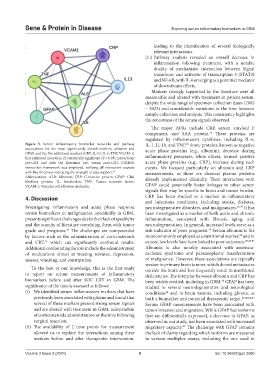
            Figure  5.  Serum inflammatory biomarker networks and pathway   IL-1, IL-1b, and TNF.  Some proteins, known as negative
                                                                                25
            associations for the most significantly altered markers, albumin and   acute phase proteins (e.g., albumin), decrease during
            GFAP, and the five additional markers (CRP, IL-13, IL-6, TNF, VCAM-1)
            that exhibited more than 22 statistically significant (P < 0.05) interactions   inflammatory processes, while others, termed positive
            pre-CRT and with the alteration pre-  versus post-CRT. STRING   acute phase proteins (e.g., CRP), increase during such
            interaction framework was employed, utilizing all interaction sources   events. We focused particularly on albumin and CRP
            with line thickness indicating the strength of data support. 14  measurements, as these are classical plasma proteins
            Abbreviations: ALB: Albumin; CRP: C-reactive protein; GFAP: Glial   already implemented clinically. Their interaction with
            fibrillary protein; IL: Interleukin; TNF: Tumor necrosis factor;
            VCAM-1: Vascular cell adhesion molecule.           GFAP could potentially foster linkages to other serum
                                                               signals that may be specific to brain and tumor burden.
            4. Discussion                                      CRP has been studied as a marker in inflammatory
                                                               and infectious conditions, including stroke, diabetes,
            Investigating inflammatory and acute phase response   neurodegenerative disorders, and malignancies. 26,79  It has
            serum biomarkers in malignancies, specifically in GBM,   been investigated as a marker of both acute and chronic
            presents significant challenges due to their lack of specificity   inflammation, associated with fibrosis, aging, and
            and the scarcity of literature correlating them with tumor   neurodegeneration. In general, increased levels serve as a
            grade and prognosis.  The challenges are compounded   risk indicator of poor prognosis.  Serum albumin is the
                                                                                          26
                             44
                                                                                                       80
            by factors such as the administration of corticosteroids   most commonly employed as a nutritional marker,  and in
            and CRT,  which can significantly confound results.   cancer, low levels have been linked to poor outcomes. 28,29,81
                    15
            Additional confounding factors include the administration   Albumin is also notably associated with anorexia-
            of medications aimed at treating seizures, depression,   cachexia syndrome and paraneoplastic manifestations
            nausea, vomiting, and constipation.                of malignancy. However, these associations are typically
                                                               weaker in primary brain tumors, which do not metastasize
              To the best of our knowledge, this is the first study   outside the brain and less frequently result in nutritional
            to  report  on serum  measurements of  inflammatory   deficiencies. The interplay between albumin and CRP has
            biomarkers before and after SOC CRT in GBM. The    been widely studied, including in GBM.  GFAP has been
                                                                                               32
            significance of the data is assessed as follows:   studied in several neurodegenerative and neurological
            (i)  We identified serum inflammatory markers that have   conditions  and in brain tumors, including glioma, as
                                                                        14
               previously been associated with glioma and found that   both a biomarker and potential therapeutic target. 47,48,82,83
               several of these markers present strong serum signals   Serum GFAP measurements have been associated with
               and are altered with treatment in GBM, independent   tumor invasion and migration. While GFAP has isoforms
               of corticosteroids administration or the time following   that are differentially expressed, a decrease in GFAP, as
               surgical resection.                             observed in our study, has been associated with increased
            (ii)  The availability of 2  time points for measurement   migratory capacity.  The challenge with GFAP remains
                                                                               84
               allowed us to explore the interactions among these   the lack of clarity regarding which isoforms are measured
               markers before and after therapeutic intervention,   in  various  multiplex  assays, including the  one used  in


            Volume 3 Issue 3 (2024)                         8                               doi: 10.36922/gpd.3580

