


Page 96 - GPD-3-3
P. 96
Gene & Protein in Disease                                              Perineural invasion in prostate cancer


                         A                        B                     C


                         D                         E                     F


                         G                         H                      I


                         J                          K                     L


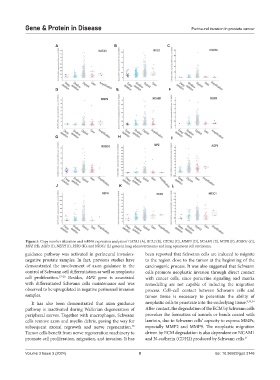
            Figure 5. Copy number alteration and mRNA expression analysis of GATA3 (A), BCL2 (B), CXCR2 (C), MMP9 (D), NCAM1 (E), NGFR (F), ROBO1 (G),
            MPZ (H), AQP3 (I), NEFH (J), PER3 (K), and NR3C1 (L) genes in lung adenocarcinoma and lung squamous cell carcinoma.
            guidance pathway was activated in perineural invasion-  been reported that Schwann cells are induced to migrate
            negative prostate samples. In fact, previous studies have   to the region close to the tumor at the beginning of the
            demonstrated the involvement of axon guidance in the   carcinogenic process. It was also suggested that Schwann
            control of Schwann cell differentiation as well as neoplastic   cells promote neoplastic invasion through direct contact
            cell proliferation. 17-20  Besides,  MPZ gene is associated   with cancer cells, since paracrine signaling and matrix
            with  differentiated Schwann cells maintenance  and  was   remodeling are not capable of inducing the migration
            observed to be upregulated in negative perineural invasion   process. Cell–cell contact between Schwann cells and
            samples.                                           tumor tissue is necessary to potentiate the ability of
              It has also been demonstrated that axon guidance   neoplastic cells to penetrate into the underlying tissue. 9,33,34
            pathway is inactivated during Wallerian degeneration of   After contact, the degradation of the ECM by Schwann cells
            peripheral nerves. Together with macrophages, Schwann   provokes the formation of tunnels or bands coated with
            cells remove axon and myelin debris, paving the way for   laminin, due to Schwann cells’ capacity to express MMPs,
            subsequent axonal regrowth and nerve regeneration.    especially MMP2 and MMP9. The neoplastic migration
                                                         26
            Tumor cells benefit from nerve regeneration machinery to   driven by ECM degradation is also dependent on NCAM1
            promote cell proliferation, migration, and invasion. It has   and N-cadherin (CDH2) produced by Schwann cells. 31


            Volume 3 Issue 3 (2024)                         8                               doi: 10.36922/gpd.3146

