


Page 23 - GTM-1-1
P. 23
Global Translational Medicine                                Anticancer effect of S. xanthocarpum on KB cell line


                         A


                         B


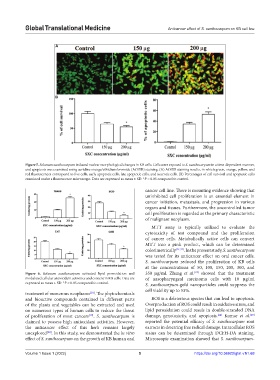
            Figure 5. Solanum xanthocarpum induced nuclear morphological changes in KB cells. Cells were exposed to S. xanthocarpum in a time‐dependent manner,
            and apoptosis was examined using acridine orange/ethidium bromide (AO/EB) staining. (A) AO/EB staining results, in which green, orange, yellow, and
            red fluorescences correspond to live cells, early apoptotic cells, late apoptotic cells, and necrotic cells. (B) Percentages of cell survival and apoptotic cells
            examined under a fluorescence microscope. Data are expressed as mean ± SD. *P < 0.05 compared to control.

                                                               cancer cell line. There is mounting evidence showing that
                                                               uninhibited cell proliferation is an essential element in
                                                               cancer initiation, metastasis, and progression in various
                                                               organs and tissues. Furthermore, the uncontrolled tumor
                                                               cell proliferation is regarded as the primary characteristic
                                                               of malignant neoplasm.

                                                                 MTT  assay  is  typically  utilized  to  evaluate  the
                                                               cytotoxicity of test compound and the proliferation
                                                               of cancer cells. Metabolically active cells can convert
                                                               MTT into a pink product, which can be determined
                                                               colorimetrically [21,22] . In the present study, S. xanthocarpum
                                                               was tested for its anticancer effect on oral cancer cells.
                                                               S. xanthocarpum reduced the proliferation of KB cells
                                                               at the concentrations of 50, 100, 150, 200, 300, and
                                                                                    [23]
            Figure  6.  Solanum xanthocarpum  activated  lipid  peroxidation  and   350  µg/ml. Zhang  et al.  showed that the treatment
            modulated cellular antioxidant activities and content in KB cells. Data are   of nasopharyngeal carcinoma cells with 10  µg/ml
            expressed as mean ± SD. *P < 0.05 compared to control.  S. xanthocarpum-gold nanoparticles could suppress the
                                                               cell viability up to 53%.
            treatment of numerous neoplasms . The phytochemicals
                                       [18]
            and bioactive compounds contained in different parts   ROS is a deleterious species that can lead to apoptosis.
            of the plants and vegetables can be extracted and used   Overproduction of ROS could result in oxidative stress, and
            on numerous types of human cells to reduce the threat   lipid peroxidation could resuls in double-stranded DNA
                                                                                              [24]
                                                                                                           [25]
            of proliferation of most cancers .  S. xanthocarpum is   damage, genotoxicity, and apoptosis.  Kumar  et al.
                                       [19]
            claimed to possess high antioxidant activities. However,   reported the potential efficacy of  S. xanthocarpum root
            the anticancer effect of this herb remains largely   extracts in deterring free radical damage. Intracellular ROS
            unexplored . In this study, we demonstrated the in vitro   status can be determined through DCFH-DA staining.
                     [20]
            effect of S. xanthocarpum on the growth of KB human oral   Microscopic examination showed that S. xanthocarpum-
            Volume 1 Issue 1 (2022)                         5                       https://doi.org/10.36922/gtm.v1i1.68

