


Page 12 - GTM-1-2
P. 12
Global Translational Medicine                                            Effect of leptin on aortic dissection


                                                               results showed that there was a statistical difference in the
                                                               reduction of aortic dilatation compared with the control
                                                               group. The meta-analysis of all four studies (including
                                                               five animal experiments) showed that the increase in local
                                                               leptin content had a statistically significant effect on aortic
                                                               dilatation, with a combined RR of 0.11 (95% CI: 0.01 –
                                                               0.22;  P = 0.0001; random effects model) and statistical
                                                               heterogeneity (P < 0.0001; I  = 95.7%). The increase in local
                                                                                    2
                                                               leptin content promoted the dilation of mouse aorta. The
                                                               forest plot is shown in Figure 3.

                                                               3.5. Publication bias results
                                                               First, a funnel chart was used to conduct a qualitative
                                                               analysis of publication bias (sensitivity analysis based
                                                               on the difference in artery diameter) for the included
                                                               literature, showing that the distribution was asymmetric.
                                                               For further verification, Egger’s test was conducted, and
                                                               the  results  showed  that  there  was  no  publication  bias,
                                                               P = 0.988 (>0.05) (Figure 4 and Figure S1).
                                                               3.6. Sensitivity analysis

                                                               Due to the differences in the quality and sample size of the
                                                               studies, the heterogeneity among the studies was significant.
                                                               A sensitivity analysis was conducted to verify the reliability
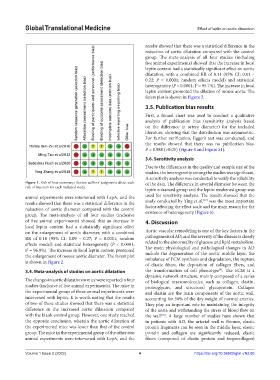
            Figure 1. Risk of bias summary: Review authors’ judgments about each   of the data. The difference in arterial diameter between the
            risk of bias item for each included study.
                                                               leptin enhanced group and the leptin weakened group was
            animal experiments were intervened with LepA, and the   used for sensitivity analysis. The results showed that the
                                                                                       [17]
            results showed that there was a statistical difference in the   study conducted by Ying et al.  was the most important
            reduction of aortic diameter compared with the control   factor affecting the effect scale and the main reason for the
                                                               existence of heterogeneity (Figure 5).
            group. The meta-analysis of all four studies (inclusive
            of five animal experiments) showed that an increase in   4. Discussion
            local leptin content had a statistically significant effect
            on the enlargement of aortic diameter, with a combined   Aortic vascular remodeling is one of the key factors in the
            RR of 0.18  (95% CI: 0.09 – 0.27;  P  = 0.0001; random   pathogenesis of AD, and the severity of the disease is closely
            effects  model)  and  statistical  heterogeneity  (P  <  0.0001;   related to the abnormality of glucose and lipid metabolism.
            I  = 96.9%). The increase in local leptin content promoted   The main physiological and pathological changes in AD
            2
            the enlargement of mouse aortic diameter. The forest plot   include the degeneration of the aortic middle layer, the
                                                               imbalance of ECM synthesis and degradation, the rupture
            is shown in Figure 2.
                                                               of elastic fibers, the deposition of collagen fibers, and
                                                                                              [9]
            3.4. Meta-analysis of studies on aortic dilatation  the transformation of cell phenotype . The ECM is a
                                                               dynamic network structure, mainly composed of a series
            The changes in aortic dilatation in mice were reported in four   of biological macromolecules, such as collagen, elastin,
            studies (inclusive of five animal experiments). The mice in   proteoglycan, and structural glycoprotein. Collagen
            the experimental group of three animal experiments were   and elastin are the main components of the aortic wall,
            intervened with leptin. It is worth noting that the results   accounting for 50% of the dry weight of normal arteries.
            of two of these studies showed that there was a statistical   They play an important role in maintaining the integrity
            difference in the increased aortic dilatation compared   of the aorta and withstanding the stress of blood flow on
            with the blank control group. However, one study reached   the wall . A  large number of studies have shown that
                                                                     [10]
            the opposite conclusion, wherein the aortic dilatation of   in patients with AD, the arterial wall is thinner, elastic
            the experimental mice was lesser than that of the control   protein fragments can be seen in the middle layer, elastic
            group. The mice in the experimental group of the other two   protein and collagen are significantly reduced, elastic
            animal experiments were intervened with LepA, and the   fibers (composed of elastic protein and tropocollagen)


            Volume 1 Issue 2 (2022)                         4                       https://doi.org/10.36922/gtm.v1i2.85

