


Page 37 - GTM-1-2
P. 37
Global Translational Medicine                             Proteomic analysis of heart in metabolic cardiomyopathy


                         A                                    B


                         C


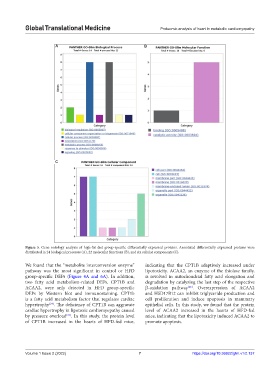
            Figure  5.  Gene ontology analysis of high-fat diet group-specific differentially expressed proteins. Annotated differentially expressed proteins were
            distributed in 24 biological processes (A), 22 molecular functions (B), and six cellular components (C).


            We found that the “metabolite interconversion enzyme”   indicating that the CPT1B adaptively increased under
            pathway  was the  most  significant  in control  or  HFD   lipotoxicity. ACAA2, an enzyme of the thiolase family,
            group-specific DEPs (Figure  4A  and  6A). In addition,   is involved in mitochondrial fatty acid elongation and
            two fatty acid metabolism-related DEPs, CPT1B and   degradation by catalyzing the last step of the respective
            ACAA2, were only detected in  HFD group-specific   β-oxidation pathway . Overexpression of ACAA2
                                                                                 [26]
            DEPs by Western blot and immunostaining. CPT1b     and HSD17B12 can inhibit triglyceride production and
            is a fatty acid metabolism factor that regulates cardiac   cell proliferation and induce apoptosis in mammary
            hypertrophy . The deficiency of CPT1B can aggravate   epithelial cells. In this study, we found that the protein
                      [24]
            cardiac hypertrophy in lipotoxic cardiomyopathy caused   level of ACAA2 increased in the hearts of HFD-fed
            by pressure overload . In this study, the protein level   mice, indicating that the lipotoxicity induced ACAA2 to
                             [25]
            of CPT1B increased in the hearts of HFD-fed mice,   promote apoptosis.


            Volume 1 Issue 2 (2022)                         7                      https://doi.org/10.36922/gtm.v1i2.137

