


Page 36 - GTM-1-2
P. 36
Global Translational Medicine                            Proteomic analysis of heart in metabolic cardiomyopathy


                              A


                              B


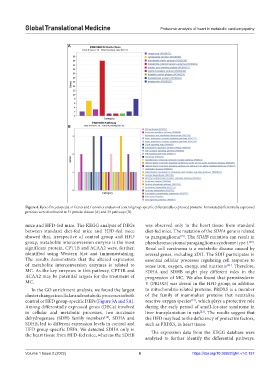
            Figure 4. Kyoto Encyclopedia of Genes and Genomes analysis of control group-specific differentially expressed proteins. Annotated differentially expressed
            proteins were distributed in 51 protein classes (A) and 33 pathways (B).

            mice and HFD-fed mice. The KEGG analysis of DEGs   was observed only in the heart tissue from standard
            between standard  diet-fed  mice  and HFD-fed mice   diet-fed mice. The mutation of the SDHA gene is related
            showed that, irrespective of control group and HFD   to paraganglioma [19] . The SDHB mutation can result in
            group, metabolite interconversion enzyme is the most   pheochromocytoma/paraganglioma syndrome type 4 [20] .
            significant protein. CPT1B and ACAA2 were, further,   Renal cell carcinoma is a metabolic disease caused by
            identified using Western blot and immunostaining.   several genes, including SDH. The SDH participates in
            The results demonstrate that the altered expression   essential cellular processes regulating cell response to
            of  metabolite  interconversion  enzymes  is related to   sense iron, oxygen, energy, and nutrients [21] . Therefore,
            MC. As the key enzymes in this pathway, CPT1B and   SDHA and SDHB might play different roles in the
            ACAA2 may be potential targets for the treatment of   progression of MC. We also found that peroxiredoxin
            MC.                                                V (PRDX5) was absent in the HFD group, in addition
              In the GO enrichment analysis, we found the largest   to mitochondria-related proteins. PRDX5 is a member
            cluster changes in cellular and metabolic processes in both   of the family of mammalian proteins that neutralize
            control or HFD group-specific DEPs (Figure 3A and 5A).   reactive oxygen species [22] , which plays a protective role
            Among differentially expressed genes (DEGs) involved   during  the  early  period  of  small-for-size  syndrome  in
            in cellular and metabolic processes, two succinate   liver transplantation in rats [23] . The results suggest that
            dehydrogenase (SDH) family members [18] , SDHA and   the HFD may lead to the deficiency of protective factors,
            SDHB, led to different expression levels in control and   such as PRDX5, in heart tissue.
            HFD group-specific DEPs. We detected SDHA only in
            the heart tissue from HFD-fed mice, whereas the SDHB   The expression data from the KEGG database were
                                                               analyzed to further identify the differential pathways.


            Volume 1 Issue 2 (2022)                         6                      https://doi.org/10.36922/gtm.v1i2.137

