


Page 44 - GTM-1-2
P. 44
Global Translational Medicine                                         Cirrhosis and hepatocellular carcinoma


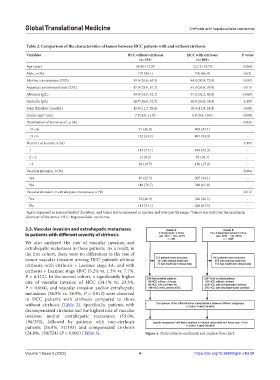
            Table 2. Comparison of the characteristics of tumor between HCC patients with and without cirrhosis
            Variables                                  HCC without cirrhosis     HCC with cirrhosis     P‑value
                                                            (n=193)                 (n=894)
            Age (year)                                     50.35±12.39             52.12±10.70           0.066
            Male, n (%)                                     170 (88.1)              776 (86.8)           0.631
            Alanine transaminase (U/L)                    39.0 (26.0, 65.5)       44.0 (30.0, 72.0)      0.003
            Aspartate aminotransferase (U/L)              47.0 (29.0, 81.7)       54.0 (35.0, 95.0)      0.015
            Albumin (g/L)                                 39.0 (35.0, 42.1)       37.0 (32.2, 40.0)     <0.001
            Globulin (g/L)                                28.7 (26.0, 32.7)       30.0 (26.0, 34.0)      0.159
            Total Bilirubin (umol/L)                      15.9 (11.7, 20.4)       18.4 (12.9, 28.9)     <0.001
            Tumor size* (cm)                               7.9 (4.0, 11.9)         5.9 (3.0, 10.0)      <0.001
            Distribution of tumor size*, n (%)                                                           0.035
             ≤5 cm                                          71 (36.8)               403 (45.1)            -
             >5 cm                                          122 (63.2)              491 (54.9)            -
            Number of tumors, n (%)                                                                      0.195
             1                                              143 (74.1)              646 (72.3)            -
             2 – 3                                          12 (6.2)                92 (10.3)             -
             >3                                             38 (19.7)               156 (17.4)            -
            Vascular invasion, n (%)                                                                     0.004
             Yes                                            45 (23.3)               305 (34.1)            -
             No                                             148 (76.7)              589 (65.9)            -
            Vascular invasion or extrahepatic metastases, n (%)                                          0.012
             Yes                                            52 (26.9)               326 (36.5)            -
             No                                             141 (73.1)              568 (63.5)            -
            Age is expressed as mean±standard deviation, and tumor size is expressed as median and interquartile range. *Tumor size indicates the maximum
            diameter of the tumor. HCC: Hepatocellular carcinoma

            3.3. Vascular invasion and extrahepatic metastases
            in patients with different severity of cirrhosis
            We also analyzed the rate of vascular invasion and
            extrahepatic metastases in these patients. As a result, in
            the first cohort, there were no differences in the rate of
            tumor vascular invasion among HCC patients without
            cirrhosis, with cirrhosis + Laennec stage 4A, and with
            cirrhosis + Laennec stage 4B/C (5.2% vs. 1.3% vs. 7.7%,
            P = 0.112). In the second cohort, a significantly higher
            rate of vascular invasion of HCC (34.1% vs. 23.3%,
            P  = 0.004), and vascular invasion and/or extrahepatic
            metastases (36.5% vs. 26.9%, P = 0.012) were observed
            in  HCC  patients  with  cirrhosis  compared  to  those
            without cirrhosis  (Table  2).  Specifically, patients with
            decompensated cirrhosis had the highest rate of vascular
            invasion and/or extrahepatic  metastases  (53.0%,
            196/370), followed by patients with non-cirrhosis
            patients (26.9%, 52/193) and compensated cirrhosis
            (24.8%, 130/524) (P < 0.001) (Table 3).            Figure 1. Study subjects enrollment and analysis flow chart.


            Volume 1 Issue 2 (2022)                         4                       https://doi.org/10.36922/gtm.v1i2.94

