


Page 58 - GTM-2-2
P. 58
Global Translational Medicine                                     New insights into chronic pain management


                                                               vortioxetine. Patients underwent VAS test for examination
                                                               of pain intensity on every visit. Emotional disturbances
                                                               rated  by  HADS  and  insomnia  indicated  using  DSM-5
                                                               clinical criteria were tested only on the first visit.
                                                                 Most patients with chronic pain had clinical depression
                                                               indicated by HADS and insomnia indicated by DSM-5
                                                               clinical criteria. About 74% of patients had sleep disorders
                                                               and 65% of patients had depression. Depression was
                                                               statistically rare in patients with neuropathic pain origin.
                                                               Incidence of emotional disorder was significantly lesser in
                                                               patients with neuropathic pain (33%) than in patients with
                                                               nociceptive origin (82%;  P  < 0.01). Insomnia was more
                                                               frequent in patients with nociceptive pain origin (82%)
                                                               compared with patients with neuropathic pain origin
                                                               (50%), but the present study was unable to demonstrate a
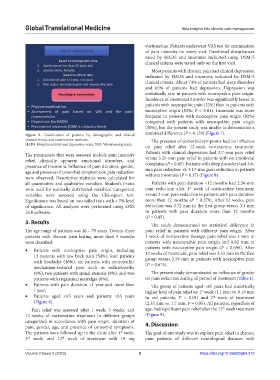
            Figure  5.  Classification of patients by demographic and clinical   statistical difference (P = 0.129) (Figure 7).
            characteristics, and examination methods.            The presence of comorbid symptoms had no influence
            HADS: Hospital anxiety and depression scale; VAS: Visual analog scale.
                                                               on pain relief after 12-week vortioxetine treatment.
                                                               Patients with clinical depression had 3.7-mm pain relief
            The parameters that were assessed include pain intensity
            relief, clinically apparent emotional disorders, and   versus 3.25-mm pain relief in patients with no emotional
                                                               complains (P = 0.45). Patients with sleep disorders had 3.6-
            presence of insomnia. Influence of pain duration, gender,   mm pain reduction vs. 3.17-mm pain reduction in patients
            age and presence of comorbid symptoms on pain reduction   without insomnia (P = 0.37) (Figure 8).
            were observed. Descriptive statistics were calculated for
            all quantitative and qualitative variables. Student’s t-tests   Patients with pain duration <12 months had 2.36-mm
                                                                                  st
            were used for normally distributed variables. Categorical   pain reduction after 1   week of vortioxetine treatment
            variables were assessed using the Chi-square test.   versus 2-mm pain reduction in patients with pain duration
            Significance was based on two-tailed tests with a 5% level   more than 12 months (P = 0.279). After 12 weeks, pain
            of significance. All analyses were performed using SPSS   reduction was 3.72 mm in the first group versus 3.3 mm
            16.0 software.                                     in patients with pain duration more than 12  months
                                                               (P = 0.45).
            3. Results
                                                                 The  study  demonstrated  no statistical  difference  in
            The age range of patients was 26 – 79 years. Twenty-three   pain relief in patients with different pain origin. After
            patients with chronic pain lasting more than 3  months   1 week of vortioxetine therapy, pain relief was 1 mm in
            were classified:                                   patients  with  neuropathic  pain  origin and  0.82  mm  in
            •   Patients with nociceptive pain origin, including   patients with nociceptive pain origin (P  = 0.696). After
               13 patients with low back pain (54%), four patients   12 weeks of treatment, pain relief was 3.33 mm in the first
               with headache (16%), six patients with neuropathic   group versus 3.59 mm in patients with nociceptive pain
               mechanism-induced pain such as radiculopathy    (P = 0.675).
               (8%), two patients with spinal stenosis (8%), and two   The present study demonstrated no influence of gender
               patients with trigeminal neuralgia (8%);        on pain reduction during all period of treatment (Table 1).
            •   Patients with pain duration <1  year and more than   The group of patients aged <65 years had statistically
               1 year;                                         higher level of pain relief on 1  week (1.1 mm vs. 0.16 mm
                                                                                       st
            •   Patients aged <65  years and patients >65  years   in old patients,  P  < 0.01) and 3   week of treatment
                                                                                            rd
               (Figure 6).                                     (2.35 mm vs. 1.7 mm, P = 0.05). All patients, regardless of
                                                                                                th
              Pain  relief  was  assessed  after  1  week,  3  weeks,  and   age, had significant pain relief after the 12  week treatment
            12  weeks of vortioxetine treatment in different groups   (Figure 9).
            categorized in accordance with pain origin, duration of
            pain, gender, age, and presence of comorbid symptoms.   4. Discussion
            The patients were followed up in the clinic after 1  week,   The goal of our study was to explore pain relief in chronic
                                                    st
            3   week, and 12   week of treatment with 10  mg   pain patients of different neurological diseases with
                           th
             rd
            Volume 2 Issue 2 (2023)                         5                         https://doi.org/10.36922/gtm.312

