


Page 57 - GTM-2-2
P. 57
Global Translational Medicine                                     New insights into chronic pain management


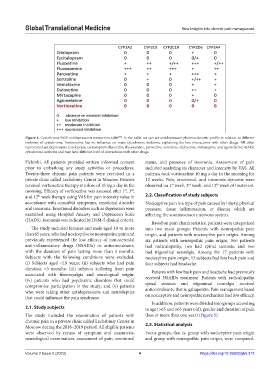
            Figure 4. Cytochrome P450 antidepressants interaction table . In the table, we can see antidepressant pharmacokinetic profile in relation to different
                                                   [45]
            isoforms of cytochrome. Vortioxetine has no influence on main cytochrome isoforms, explaining the low interactions with other drugs. All other
            represented antidepressants (citalopram, escitalopram, fluoxetine, fluvoxamine, paroxetine, sertraline, duloxetine, mirtazapine, and agomelatine) inhibit
            cytochrome isoforms and may have different level of interactions with other drugs.
            Helsinki. All patients provided written informed consent   status, and presence of insomnia. Assessment of pain
            prior to embarking any study activities or procedures.   included analyzing its character and intensity by VAS. All
            Twenty-three chronic pain patients were recruited in a   patients took vortioxetine 10 mg a day in the morning for
            private clinic called Lechebiniy Center in Moscow. Patients   12  weeks.  Pain,  emotional,  and  insomnia  dynamic  were
            received vortioxetine therapy at a dose of 10 mg a day in the   observed on 1  week, 3  week, and 12  week of treatment.
                                                                          st
                                                                                             th
                                                                                 rd
            morning. Efficacy of vortioxetine was assessed after 1 , 3 ,
                                                      st
                                                         rd
                 th
            and 12  week therapy using VAS for pain intensity value in   2.2. Classification of study subjects
            accordance with comorbid symptoms, emotional disorder   Nociceptive pain is a type of pain caused by injury, physical
            and insomnia. Emotional disorders such as depression were   pressure, tissue inflammation, or disease which are
            examined using Hospital Anxiety and Depression Scale   affecting the somatosensory nervous system.
            (HADS). Insomnia was indicated by DSM-5 clinical criteria.
                                                                 Based on pain characteristics, patients were categorized
              The study included females and male aged 18 to more   into two main groups: Patients with neuropathic pain
            than 65 years, who had nociceptive or neuropatinc pain and   origin, and patients with nociceptive pain origin. Among
            previously  experienced  the low  efficacy  of non-steroidal   six  patients  with  neuropathic  pain  origin,  two  patients
            anti-inflammatory drugs (NSAIDs) or anticonvulsants,   had radiculopathy, two had spinal stenosis, and two
            with  the  duration  of  pain  lasting  more  than  3  months.   had trigeminal neuralgia. Among the 17  patients with
            Subjects with the following conditions were excluded:   nociceptive pain origin, 13 subjects had low back pain and
            (i) Subjects aged <18  years; (ii) subjects who had pain   four subjects had headache.
            duration <3  months; (iii) subjects suffering from pain
                                                                 Patients with low back pain and headache had previously
            associated with fibromyalgia and oncological origin;   received NSAIDs treatment. Patients with radiculopathy,
            (iv)  patients  who  had  psychiatric  disorders  that  could
            compromise participation in the study; and (v) patients   spinal stenosis and trigeminal neuralgia received
            who were taking other antidepressants and neuroleptics   anticonvulsants, that is, gabapentin. Pain management based
            that could influence the pain syndrome.            on nociceptive and neuropathic mechanism had low efficacy.
                                                                 In addition, patients were divided into groups according
            2.1. Study subjects                                to age (>65 and ≤65 years old), gender and duration of pain
            The study included the examination of patients with   (less or more than one year) (Figure 5).
            chronic pain in a private clinic called Lechebiniy Center in
            Moscow during the 2018–2019 period. All eligible patients   2.3. Statistical analysis
            were observed by means of symptom and anamnesis,   Focus groups, that is, group with nociceptive pain origin
            neurological examination, assessment of pain, emotional   and group with neuropathic pain origin, were compared.


            Volume 2 Issue 2 (2023)                         4                         https://doi.org/10.36922/gtm.312

