


Page 14 - GTM-2-3
P. 14
Global Translational Medicine                                               Hydrogen for acute lung injury


            species. We assigned the number “1” to represent SD rats   studies of W/D, suggesting that the choice of species can
            and the number “0” to represent other species. For the meta-  cause observed heterogeneity, particularly in the case
            analysis, we used restricted maximum likelihood estimation   SD rats (P = 0.015 < 0.05,  tau = 0.4579,  tau = 0.9132;
                                                                                                    2
                                                                                        2
            (REML) to estimate heterogeneity and used tau  statistics to                1           0
                                                 2
            explain the heterogeneity between studies using Equation II.  Figure  8). These findings emphasize the importance of
                                                               carefully selecting the appropriate ALI animal model
                tau 2  −tau 2                          (II)    that best aligns with the research hypothesis. Researchers
            ∆ =   0    1
                  tau 2 0                                      should be mindful of the potential differences in ALI
                                                               symptoms between animals and humans.
                        2
              Where  tau  represents the result before meta-   3.8. Influence of language
                        0
                        2
            regression, tau  represents the result after meta-regression,   As reported by Song  et al. , excluding non-English
                        0
                                                                                       [39]
            and Δ represents heterogeneity between studies.    literature  may introduce  a specific bias.  To address  this
              The results of the meta-analysis revealed that species   concern, our study applied Fisher’s exact test to compare the
            variations could explain 50% of heterogeneity between   included studies in different publication languages, aiming
                                                               to assess the impact of language on the results of the meta-
                                                               analysis . The result revealed that there was no significant
                                                                     [40]
                                                               difference between the studies published in different
                                                               languages (P = 0.30 > 0.05, Table 3). This finding implied
                                                               that language is not a likely factor influencing the results
                                                               of our meta-analysis and indicates that the publication bias
                                                               related to language was not a concern in the present paper.

                                                               3.9. Publication bias
                                                               Egger’s test was used to analyze the publication bias in
                                                               the present paper. As recommended by Sterne  et al. ,
                                                                                                           [41]
                                                               the  number  of  included  studies  for  tests  of  funnel  plot
                                                               asymmetry should be more than 10. Therefore, the studies
                                                               related to W/D were used  to  evaluate the publication
                                                               bias. The results of Egger’s regression plot indicated the
                                                               presence of significant differences between the studies
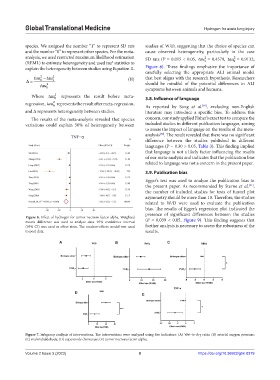
            Figure 6. Effect of hydrogen for tumor necrosis factor-alpha. Weighted
            means  difference was used to analyze data. 95% confidence interval   (P  = 0.039 <  0.05,  Figure  9). This finding  suggests that
            (95% CI) was used as effect sizes. The random-effects model was used   further analysis is necessary to assess the robustness of the
            to pool data.                                      results.

                          A                       B                     C


                                 D                           E


            Figure 7. Subgroup analysis of interventions. The interventions were analyzed using five indicators: (A) Wet-to-dry ratio; (B) arterial oxygen pressure;
            (C) malondialdehyde; (D) superoxide dismutase; (E) tumor necrosis factor-alpha.

            Volume 2 Issue 3 (2023)                         8                        https://doi.org/10.36922/gtm.0379

