


Page 41 - GTM-3-3
P. 41
Global Translational Medicine                                         Ocular changes in Alzheimer’s disease


            86,000 new cases of dementia are diagnosed in Canada   foreign material and initiate an inflammatory response
            yearly,  and of the nearly 477,000 seniors in Canada living   involving microglia and astrocytes which produce
                 8
            with dementia, 2/3 are women.  Globally, women have a   cytokines  and  free  radicals  that  will  eventually  cause
                                     9
            1.17 times higher prevalence of AD compared to men.    cell  death  and  neurodegeneration.   Aβ  aggregates  also
                                                         10
                                                                                            1
            Along  with  the  increased  prevalence  of AD  comes  the   bind to redox-active metals to produce reactive oxygen
            increased economic and social burden of caring for the   species (ROS), leading to mitochondrial damage and
            AD population. 7                                   neuronal toxicity.  Furthermore, Aβ42 triggers the
                                                                              1
                                                               hyperphosphorylation of the microtubule-binding protein
            2.2. Pathology                                     tau.  Hyperphosphorylation causes tau to dissociate from
                                                                  12
            AD is characterized by extracellular plaques composed of   the microtubule, fold abnormally, and aggregate to form
            amyloid beta (Aβ) and phosphorylated (p)-tau-containing   NTs  that  destroy  the  cytoskeleton and  lead  to  neuron
                                              3
            intracellular neurofibrillary tangles (NTs).  The amyloid   death.  In addition, p-tau interferes with anterograde
                                                                    12
            hypothesis describes Aβ accumulation as the central   axonal transport and inhibits mitochondrial transport,
            player in the pathophysiology of the disease.  As seen in   further contributing to the generation of ROS.  Elevated
                                                1
                                                                                                     11
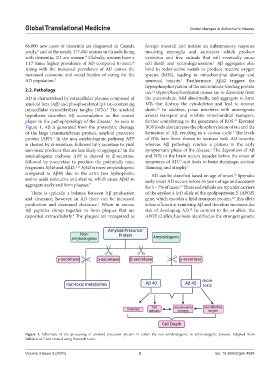
            Figure  1, Aβ is generated from the proteolytic cleavage   ROS levels also increase the phosphorylation of tau and the
                                                                                                    1
            of the large transmembrane protein, amyloid precursor   formation of Aβ, resulting in a vicious cycle.  The levels
            protein (APP).  In the non-amyloidogenic pathway, APP   of NTs have been shown to increase with AD severity,
                        1
            is cleaved by α-secretase, followed by γ-secretase to yield   whereas Aβ pathology reaches a plateau in the early
            non-toxic products that are less likely to aggregate.  In the   symptomatic phase of the disease.  The deposition of Aβ
                                                    3
                                                                                           1
            amyloidogenic  pathway  APP is cleaved by  β-secretase,   and NTs in the brain occurs decades before the onset of
            followed by  γ-secretase to produce the potentially toxic   symptoms of AD,  and leads to brain shrinkage, cortical
                                                                             13
            fragments Aβ40 and Aβ42.  Aβ42 is more amyloidogenic   thinning, and atrophy. 3
                                 3,11
            compared to Aβ40 due to the extra two hydrophobic    AD can be classified based on age of onset.  Sporadic
                                                                                                     12
            amino acids isoleucine and alanine, which cause Aβ42 to   early-onset AD occurs before 65 years of age and accounts
            aggregate easily and form plaques. 3               for 3 – 7% of cases.  These individuals are typically carriers
                                                                              12
              There is typically a balance between Aβ production   of the epsilon 4 (ε4) allele of the apolipoprotein E (APOE)
            and clearance; however, in AD there can be increased   gene, which encodes a lipid transport protein.  This allele
                                                                                                    12
            production and decreased clearance.  When in excess,   is less efficient at removing Aβ and therefore increases the
                                           1
            Aβ peptides clump together to form plaques that are   risk of developing AD.  In contrast to the  ε4  allele, the
                                                                                  12
            deposited extracellularly.  The plaques are recognized as   APOE ε2 allele has been identified as the strongest genetic
                                3


            Figure  1.  Schematic of the processing of amyloid precursor protein in either the non-amyloidogenic or amyloidogenic process. Adapted from
            Sultan et al.  and created using Biorender.com.
                   12

            Volume 3 Issue 3 (2024)                         2                               doi: 10.36922/gtm.4094

