


Page 78 - GTM-3-3
P. 78
Global Translational Medicine                               Graphene oxide in cancer drug delivery applications


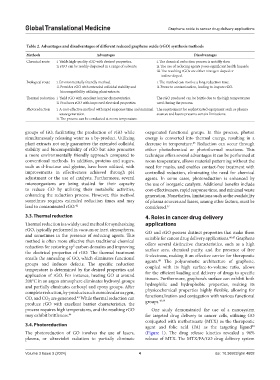
            Table 2. Advantages and disadvantages of different reduced graphene oxide (rGO) synthesis methods
            Methods                       Advantages                               Disadvantages
            Chemical route  i. Yields high-quality rGO with desired properties.  i. The chemical reduction process is notably slow.
                         ii. rGO can be readily dispersed in a range of solvents.  ii. The use of reducing agents poses significant health hazards.
                                                                    iii.  The resulting rGOs are either nitrogen-doped or
                                                                      iodine-doped.
            Biological route  i. Environmentally friendly method.   i. The method can involve a long reduction time.
                         ii.  Provides rGO with extended colloidal stability and   ii. Prone to contamination, leading to impure rGO.
                           biocompatibility utilizing plant extracts.
            Thermal reduction i. Yield rGO with excellent barrier characteristics.  The rGO produced can be brittle due to the high temperatures
                         ii. Produces rGO with improved electrical properties.  used during the process.
            Photoreduction  i.  A cost-effective method with rapid response time and minimal  The requirement for sophisticated equipment such as plasma
                          waste generation.                         sources and lasers presents certain limitations.
                         ii. The process can be conducted at room temperature.

            groups of GO, facilitating the production of rGO while   oxygenated functional groups. In  this  process,  photon
            simultaneously releasing water as a by-product. Utilizing   energy is converted into thermal energy, resulting in a
            plant extracts not only guarantees the extended colloidal   decrease in temperature.  Reduction can occur through
                                                                                   45
            stability  and  biocompatibility  of  rGO  but  also  promotes   either photochemical or photothermal reactions. This
            a more environmentally friendly approach compared to   technique offers several advantages: it can be performed at
            conventional  methods. In  addition,  proteins  and sugars,   room temperature, allows material patterning without the
            such as d-fructose and glycine, have been utilized, with   need for masks, and enables contact-free treatment with
            improvements  in  effectiveness  achieved  through  pH   controlled reduction, eliminating the need for chemical
            adjustment or the use of catalysts. Furthermore, several   agents. In some cases, photoreduction is enhanced by
            microorganisms are being studied for their capacity   the use of inorganic catalysts. Additional benefits include
            to reduce GO by utilizing their metabolic  activities,   cost-effectiveness, rapid response time, and minimal waste
            enhancing the reduction process. However, this method   generation. Nonetheless, limitations such as the availability
            sometimes requires extended reduction times and may   of plasma sources and lasers, among other factors, must be
            lead to contaminated rGO. 42                       considered. 37
            3.3. Thermal reduction                             4. Roles in cancer drug delivery

            Thermal reduction is a widely used method for synthesizing   applications
            rGO, typically performed in vacuum or inert atmospheres,   GO and rGO possess distinct properties that make them
            and sometimes in the presence of reducing agents. This   suitable for cancer drug delivery applications. 46,47  Graphene
            method is often more effective than traditional chemical   offers several distinctive characteristics, such as a high
            reduction for restoring sp² carbon domains and improving   surface area, chemical purity, and the presence of free
            the electrical properties of rGO. The thermal treatment   π-electrons, making it an effective carrier for therapeutic
            entails the annealing of GO, which eliminates functional   48
            groups and induces defects. The specific reduction   agents.  The polyaromatic architecture of  graphene,
            temperature is determined by the desired properties and   coupled with its high surface-to-volume ratio, allows
            application of rGO. For instance, heating GO at around   for the efficient loading and delivery of drugs to specific
            200°C in an argon atmosphere eliminates hydroxyl groups   tissues. Furthermore, graphene’s surface can exhibit both
            and partially eliminates carboxyl and epoxy groups. After   hydrophilic and hydrophobic properties, making its
            complete reduction, by-products such as molecular oxygen,   physicochemical  properties  highly  flexible,  allowing  for
            CO, and CO₂ are generated.  While thermal reduction can   functionalization and conjugation with various functional
                                  43
                                                                     48,49
            produce rGO with excellent barrier characteristics, the   groups.
            process requires high temperatures, and the resulting rGO   One study demonstrated the use of a nanosystem
            may exhibit brittleness. 44                        for targeted drug delivery to cancer cells, utilizing GO
                                                               conjugated with methotrexate (MTX) as the therapeutic
            3.4. Photoreduction                                agent and folic acid (FA) as the targeting ligand
                                                                                                            50
            The photoreduction of GO involves the use of lasers,   (Figure  1). The drug release kinetics revealed a 96%
            plasma,  or ultraviolet  radiation to partially eliminate   release of MTX. The MTX/FA/GO drug delivery system


            Volume 3 Issue 3 (2024)                         4                               doi: 10.36922/gtm.4602

