


Page 15 - IJAMD-1-1
P. 15
International Journal of AI
            for Material and Design                                               ML in 3D bioprinting of cultivated meat


                         A                                     B


                                                               C


                                                               D


                         E
                                                               F


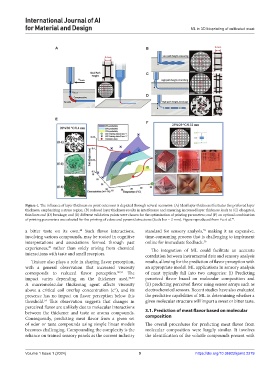
            Figure 4. The influence of layer thickness on print outcomes is depicted through several scenarios: (A) Ideal layer thickness illustrates the preferred layer
            thickness, emphasizing a stress region; (B) reduced layer thickness results in interference and smearing; increased layer thickness leads to (C) elongated,
            thin lines and (D) breakage; and (E) different validation points were chosen for the optimization of printing parameters; and (F) an optimal combination
            of printing parameters was selected for the printing of cubes and pyramid structures (Scale bar = 2 mm). Figure reproduced from Fu et al. .
                                                                                                    45
            a  bitter  taste  on  its  own.   Such  flavor  interactions,   standard for sensory analysis,  making it an expensive,
                                   48
                                                                                       55
            involving various compounds, may be rooted in cognitive   time-consuming process that is challenging to implement
            interpretations and associations formed through past   online for immediate feedback. 56
            experiences,  rather than solely arising from chemical   The integration of ML could facilitate an accurate
                      49
            interactions with taste and smell receptors.       correlation between instrumental data and sensory analysis
              Texture also plays a role in shaping flavor perception,   results, allowing for the prediction of flavor perception with
            with a general observation that increased viscosity   an appropriate model. ML applications in sensory analysis
            corresponds to reduced flavor perception. 50,51  The   of meat typically fall into two categories: (i) Predicting
            impact varies depending on the thickener used. 52,53    perceived flavor based on molecular composition and
            A  macromolecular  thickening  agent  affects  viscosity   (ii) predicting perceived flavor using sensor arrays such as
            above a critical coil overlap concentration (c*), and its   electrochemical sensors. Recent studies have also evaluated
            presence has no impact on flavor perception below this   the predictive capabilities of ML in determining whether a
            threshold.  This observation suggests that changes in   given molecular structure will impart a sweet or bitter taste.
                    54
            perceived flavor are unlikely due to molecular interactions
            between  the  thickener  and  taste  or  aroma  compounds.   3.1. Prediction of meat flavor based on molecular
            Consequently, predicting meat flavor from a given set   composition
            of odor or taste compounds using simple linear models   The overall procedures for predicting meat flavor from
            becomes challenging. Compounding the complexity is the   molecular composition were largely similar. It involves
            reliance on trained sensory panels as the current industry   the identification of the volatile compounds present with


            Volume 1 Issue 1 (2024)                         9                       https://doi.org/10.36922/ijamd.2279

