


Page 18 - IJAMD-1-1
P. 18
International Journal of AI
            for Material and Design                                               ML in 3D bioprinting of cultivated meat


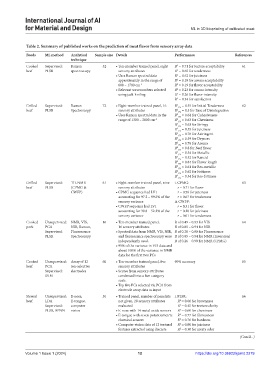
            Table 2. Summary of published works on the prediction of meat flavor from sensory array data
            Foods   ML method  Analytical   Sample size Details            Performance               References
                               technique
            Cooked   Supervised:   Raman     52   •  Ten‑member trained panel, eight   R  = 0.71 for texture acceptability  61
                                                                            2
            beef    PLSR       spectroscopy        sensory attributes      R  = 0.65 for tenderness
                                                                            2
                                                  •  Uses Raman spectral data   R  = 0.62 for juiciness
                                                                            2
                                                   approximately in the range of    R  = 0.18 for aroma acceptability
                                                                            2
                                                   600 – 1700 cm -1        R  = 0.19 for flavor acceptability
                                                                            2
                                                  •  Relevant wavenumbers selected   R  = 0.23 for aroma intensity
                                                                            2
                                                   using jack-knifing      R  = 0.26 for flavor intensity
                                                                            2
                                                                           R  = 0.34 for satisfaction
                                                                            2
            Grilled   Supervised:  Raman     72   •  Eight‑member trained panel, 16   R 2 CV  = 0.55 for Initial Tenderness  62
            beef    PLSR       Spectroscopy        sensory attributes      R 2 CV  = 0.5 for Ease of Disintegration
                                                  •  Uses Raman spectral data in the   R 2 CV  = 0.64 for Cohesiveness
                                                   range of 1300 – 2800 cm -1  R 2 CV  = 0.63 for Chewiness
                                                                           R 2 CV  = 0.63 for Stringy
                                                                           R 2 CV  = 0.55 for Juiciness
                                                                           R 2 CV  = 0.76 for Astringent
                                                                           R 2 CV  = 0.59 for Dryness
                                                                           R 2 CV  = 0.76 for Aroma
                                                                           R 2 CV  = 0.8 for Beef flavor
                                                                           R 2 CV  = 0.54 for Metallic
                                                                           R 2 CV  = 0.52 for Rancid
                                                                           R 2 CV  = 0.84 for Flavor length
                                                                           R 2 CV  = 0.61 for Res-metallic
                                                                           R 2 CV  = 0.62 for Fattiness
                                                                           R 2   = 0.54 for Res-fattiness
                                                                             CV
            Grilled   Supervised:  TD-NMR    61   •  Eight‑member trained panel, nine   i. CPMG:        63
            beef    PLSR       (CPMG &             sensory attributes        r = 0.71 for flavor
                               CWFP)              •  CPMG sequence had LV1   r = 0.56 for juiciness
                                                   accounting for 97.2 – 99.2% of the   r = 0.67 for tenderness
                                                   sensory variance        ii. CWFP:
                                                  •  CWFP sequence had LV1   r = 0.31 for flavor
                                                   accounting for 39.8 – 52.2% of the   r = 0.28 for juiciness
                                                   sensory variance          r = 0.01 for tenderness
            Cooked   Unsupervised:  NMR, VIS,   16  •  Ten‑member trained panel,    R of 0.49 – 0.93 for VIS  64
            pork    PCA        NIR, Raman,         16 sensory attributes   R of 0.05 – 0.94 for NIR
                    Supervised:  Fluorescence     •  Spectral data from NMR, VIS, NIR,  R of 0.26 – 0.80 for Fluorescence
                    PLSR       Spectroscopy        and fluorescence spectroscopy were  R of 0.05 – 0.94 for NMR (Inversion)
                                                   independently used.     R of 0.26 – 0.90 for NMR (CPMG)
                                                  •  95% of the variance in VIS data and
                                                   about 100% of the variance in NMR
                                                   data for the first two PCs
            Cooked   Unsupervised:  Array of 12   60  •  Ten‑member trained panel, five   90% accuracy  65
            beef    PCA        ion-selective       sensory attributes
                    Supervised:  electrodes       •  Scores from sensory attributes
                    SVM                            condensed into a five-category
                                                   scale.
                                                  •  Top five PCs selected via PCA from
                                                   electrode array data as input
            Stewed   Unsupervised:  E-nose,   30  •  Trained panel, number of panelists  i. PLSR:       66
            beef    LDA        E-tongue,           not given, 28 sensory attributes   R  = 0.66 for brownness
                                                                             2
                    Supervised:  computer          evaluated                 R  = 0.45 for texture clarity
                                                                             2
                    PLSR, BPNN  vision            • E‑nose with 14 metal oxide sensors  R  = 0.60 for chewiness
                                                                             2
                                                  •  E‑tongue with seven potentiometric   R  = 0.77 for fibrousness
                                                                             2
                                                   chemical sensors          R  = 0.76 for hardness
                                                                             2
                                                  •  Computer vision data of 12 textural   R  = 0.80 for juiciness
                                                                             2
                                                   features extracted using discrete  R  = 0.30 for meaty odor
                                                                             2
                                                                                                       (Cont’d...)
            Volume 1 Issue 1 (2024)                         12                      https://doi.org/10.36922/ijamd.2279

