


Page 85 - IJAMD-1-2
P. 85
International Journal of AI for
            Materials and Design
                                                                                   AMTransformer for process dynamics


                                                                      indicates an AM state variable in the time domain
                                                               T and spatial domain  S.  Figure  2 provides a  schematic
                                                               representation of AM states.
                                                                 Dynamical dependencies in AM can be categorized
                                                               into three types: (i) dependencies between state
                                                               properties, (ii) dependencies between rate properties, and
                                                               (iii) dependencies between state and rate properties. For
                                                               instance, the volume of a melt pool depends on the volume
                                                               of an adjacent melt pool track (a dependency between state
                                                               properties); the laser’s energy per unit property depends
                                                               on the laser speed (a dependency between rate properties);
                                                               and the melt pool’s volume is influenced by the melt pool’s
                                                               flow rate (a dependency between a state property and a
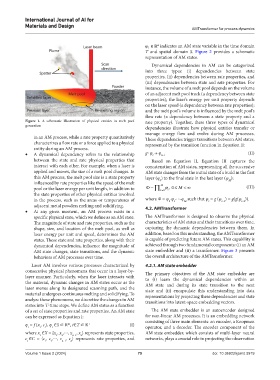
            Figure  1.  A  schematic illustration of physical entities in melt pool   rate property). Together, these three types of dynamical
            generation
                                                               dependencies illustrate how physical entities transfer or
                                                               manage energy flow and evolve during AM processes.
               in an AM process, while a rate property quantitatively   These dependencies trigger transitions between AM states,
               characterizes a flow rate or a force applied to a physical   represented by the transition function in Equation II:
               entity during an AM process.
            •   A dynamical dependency refers to the relationship   g∶ φ  → φ t+1                          (II)
                                                                  t
               between the state and rate physical properties that   Based on Equation II,  Equation III captures the
               interact with each other. For example, when a laser is   concatenation of AM states, representing all the successive
               applied and moves, the size of a melt pool changes. In   AM state changes from the initial state of a build in the first
               this AM process, the melt pool size is a state property   layer (φ ) to the final state in the last layer (φ ):
               influenced by rate properties like the speed of the melt   0 M                     M
                                                                           ≤
               pool or the laser energy per unit length, in addition to   Φ =  ∏ t =0 ϕ , 0 M  <∞         (III)
                                                                        t
               the state properties of other physical entities involved
               in the process, such as the areas or temperatures of   where Φ = φ ∙φ ∙⋯∙φ  such that φ  = g (φ ) = g(g(φ )).
                                                                                               t–1
                                                                                          t
                                                                         0
                                                                               M
                                                                           1
                                                                                                        t–2
               adjacent metal powders melting and solidifying.  4.2. AMTransformer
            •   At any given moment, an AM process exists in a
               specific physical state, which we define as an AM state.   The AMTransformer is designed to observe the physical
               The magnitude of state and rate properties, such as the   characteristics of AM states and their transitions over time,
               shape, size, and location of the melt pool, as well as   capturing the  dynamic dependencies  between them.  In
               laser energy per unit and speed, determines the AM   addition, based on this understanding, the AMTransformer
               states. These state and rate properties, along with their   is capable of predicting future AM states. This capability is
               dynamical dependencies, influence the magnitude of   achieved through two fundamental components: (i) an AM
               AM state changes, state transitions, and the dynamic   state embedder and (ii) a transformer. Figure 3 presents
               behaviors of AM processes over time.            the overall architecture of the AMTransformer.
              Laser AM involves various processes characterized by   4.2.1. AM state embedder
            consecutive physical phenomena that occur in a layer-by-  The  primary  objectives  of the  AM  state  embedder  are
            layer manner. Particularly, when the laser interacts with   to  (i)  learn  the  dynamical  dependencies  within  an
            the material, dynamic changes in AM states occur as the   AM state and during its state transition to the next
            laser moves along its designated scanning path, and the   state and (ii) encapsulate this understanding into data
            material undergoes continuous melting and solidifying. To   representations by projecting these dependencies and state
            analyze these phenomena, we discretize the changes in AM   transitions into latent-space embedding vectors.
            states into T-time steps. We define AM states as a function
            of a set of state properties and rate properties. An AM state   The AM state embedder is an autoencoder designed
            can be expressed as Equation I:                    for non-linear AM processes. It is an embedding network
                                                               consisting of three main elements: an encoder, a Koopman
            φ  = f (x , c ), φ  ∈S ⊂ ℝ , t∈T ⊂ ℝ +      (I)    operator, and a decoder. The encoder component of the
                              m
             t
                       t
                    t
                  t
            where x  ∈X = {x , x ,⋯, x , x } represents state properties,   AM state embedder, which consists of multi-layer neural
                                   n
                         1
                           2
                                n–1
                  t
            c ∈C = {c , c ,⋯,  c ,  c } represents rate properties, and   networks, plays a crucial role in projecting the observation
                    1
                       2
                               n
             t
                           n–1
            Volume 1 Issue 2 (2024)                         79                             doi: 10.36922/ijamd.3919

