


Page 44 - IJAMD-1-3
P. 44
International Journal of AI for
            Materials and Design
                                                                                  Metal AM porosity prediction using ML


                         A                                       B


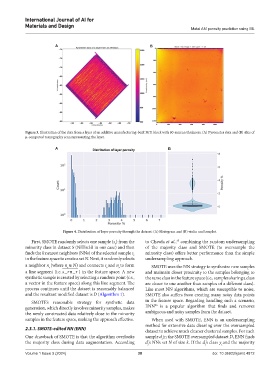
            Figure 3. Illustration of the data from a layer of an additive manufacturing-built NiTi block with 60-micron thickness. (A) Pyrometer data and (B) slice of
            µ-computed tomography scan representing the layer.

                         A                                               B


                            Figure 4. Distribution of layer porosity through the dataset: (A) Histogram and (B) violin and boxplot.
              First, SMOTE randomly selects one sample (s ) from the   to Chawla et al.,  combining the random undersampling
                                                                            35
                                                  r
            minority class in dataset S (NiTi×3B in our case) and then   of  the  majority  class  and  SMOTE  (to  oversample  the
            finds the k nearest neighbors (NNs) of the selected sample s r   minority class) offers better performance than the simple
            in the feature space to create a set N. Next, it randomly selects   undersampling approach.
            a neighbor n (where n ∈ N) and connects s and n to form   SMOTE uses the NN strategy to synthesize new samples
                                              r
                      r
                              r
                                                   r
            a line segment (i.e. _ _ s rn r ) in the feature space. A new   and maintain closer proximity to the samples belonging to
            synthetic sample is created by selecting a random point (i.e.,   the same class in the feature space (i.e., samples sharing a class
            a vector in the feature space) along this line segment. The   are closer to one another than samples of a different class).
            process continues until the dataset is reasonably balanced   Like most NN algorithms, which are susceptible to noise,
            and the resultant modified dataset is D (Algorithm 1).  SMOTE also suffers from creating many noisy data points
              SMOTE’s  reasonable  strategy  for  synthetic  data   in the feature space. Regarding handling such a scenario,
                                                                   36
            generation, which directly involves minority samples, makes   ENN  is a popular algorithm that finds and removes
            the newly constructed data relatively close to the minority   ambiguous and noisy samples from the dataset.
            samples in the feature space, making the approach effective.  When used with SMOTE, ENN is an undersampling
                                                               method for extensive data cleaning over the oversampled
            2.3.1. SMOTE-edited NN (ENN)                       dataset to achieve much cleaner clustered samples. For each
            One drawback of SMOTE is that the algorithm overlooks   sample d in the SMOTE oversampled dataset D, ENN finds
                                                                      i
            the majority class during data augmentation. According   d’s NNs set N of size k. If the d’s class y and the majority
                                                                                        i
                                                                                               i
                                                                i
            Volume 1 Issue 3 (2024)                         38                             doi: 10.36922/ijamd.4812

