


Page 26 - IJAMD-2-3
P. 26
International Journal of AI for
            Materials and Design                                                   AI applications in composite materials


              A


              B                                            C


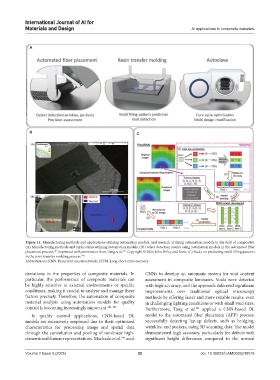
            Figure 11. Manufacturing methods and applications utilizing automation models, and research utilizing automation models in the field of composites.
            (A) Manufacturing methods and applications utilizing automation models; (B) Defect detection results using automation models in the automated fiber
                        141
            placement process.  Reprinted with permission from Tang et al.  Copyright © 2024 John Wiley and Sons; (C) Study on predicting mold filling patterns
                                                     141
            in the resin transfer molding process. 142
            Abbreviations: RNN: Recurrent neural network; LSTM: Long short-term memory.
            deviations in the properties of composite materials. In   CNNs to develop an automatic system for void content
            particular, the performance of composite materials can   assessment in composite laminates. Voids were detected
            be highly sensitive to external environments or specific   with high accuracy, and the approach delivered significant
            conditions, making it crucial to analyze and manage these   improvements over traditional optical microscopy
            factors precisely. Therefore, the automation of composite   methods by offering faster and more reliable results, even
            material analysis using automation models for quality   in challenging lighting conditions or with small void sizes.
            control is becoming increasingly important. 141-145  Furthermore, Tang  et al.  applied a CNN-based DL
                                                                                    141
              In quality control applications, CNN-based DL    model to the automated fiber placement (AFP) process,
            models are extensively employed due to their optimized   successfully detecting lay-up defects, such as bridging,
            characteristics for  processing image  and spatial data   wrinkles, and puckers, using 3D scanning data. The model
            through the convolution and pooling of nonlinear high-  demonstrated high accuracy, particularly for defects with
            dimensional feature representations. Machado et al.  used   significant height differences compared to the normal
                                                    143

            Volume 2 Issue 3 (2025)                         20                        doi: 10.36922/IJAMD025210016

