


Page 67 - IJB-10-1
P. 67
International Journal of Bioprinting                                     Microfluidic-assisted 3D bioprinting


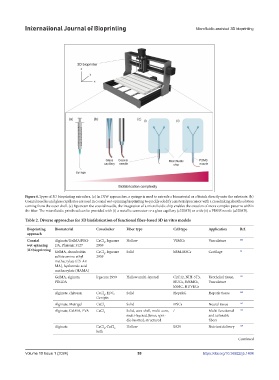
            Figure 6.Types of 3D bioprinting extruders. (a) In DIW approaches, a syringe is used to extrude a biomaterial or a bioink directly onto the substrate. (b)
            Coaxial needles and glass capillaries are used in coaxial wet-spinning bioprinting to quickly solidify a material precursor with a crosslinking sheath solution
            coming from the outer shell. (c) Upstream the coaxial needle, the integration of a microfluidic chip enables the creation of more complex patterns within
            the fiber. The microfluidic printhead can be provided with (i) a metallic connector or a glass capillary (c3DMB) or with (ii) a PDMS nozzle (a3DMB).

            Table 2. Diverse approaches for 3D biofabrication of functional fiber-based 3D in vitro models
             Bioprinting   Biomaterial    Crosslinker  Fiber type          Cell type      Application  Ref.
             approach
             Coaxial    Alginate/GelMA/PEG-  CaCl , Irgacure   Hollow      VSMCs          Vasculature  206
                                             2
             wet-spinning   DA, Pluronic F127  2959
             3D bioprinting  GelMA, chondroitin   CaCl , Irgacure   Solid  hBM-MSCs       Cartilage    32
                        sulfate amino ethyl   2959  2
                        methacrylate (CS-AE-
                        MA), hyaluronic acid
                        methacrylate (HAMA)
                        GelMA, alginate,   Irgacure 2959  Hollow multi-layered  C2C12, NIH-3T3,   Urothelial tissue,   121
                        PEGOA                                              HUCs, BdSMCs,   Vasculature
                                                                           hSMC, HUVECs
                        Alginate, chitosan  CaCl , EDC,   Solid            HepaRG         Hepatic tissue  162
                                             2
                                          Genipin
                        Alginate, Matrigel  CaCl       Solid               iPSCs          Neural tissue  167
                                             2
                        Alginate, GelMA, PVA  CaCl     Solid, core-shell, multi-core,   /  Multi-functional   168
                                             2
                                                       multi-layered, Janus, spin-        and tailorable
                                                       dle-knotted, structured            fibers
                        Alginate          CaCl , CaCl   2  Hollow          L929           Nutrient delivery  169
                                             2
                                          bath
                                                                                                       Continued


            Volume 10 Issue 1 (2024)                        59                          https://doi.org/10.36922/ijb.1404

