


Page 44 - IJB-2-1
P. 44
Utilising inkjet printed paraffin wax for cell patterning applications


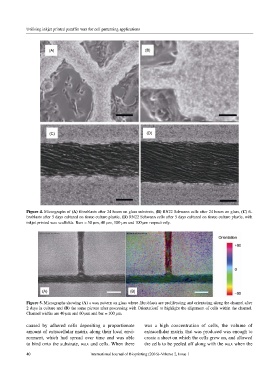
            Figure 4. Micrographs of (A) fibroblasts after 24 hours on glass substrate, (B) RN22 Schwann cells after 24 hours on glass, (C) fi-
            broblasts after 5 days cultured on tissue culture plastic, (D) RN22 Schwann cells after 5 days cultured on tissue culture plastic, with
            inkjet printed wax scaffolds. Bars = 50 µm, 40 µm, 100 µm and 100 µm respectively.


            Figure 5. Micrographs showing (A) a wax pattern on glass where fibroblasts are proliferating and orientating along the channel after
            2 days in culture and (B) the same picture after processing with OrientationJ to highlight the alignment of cells within the channel.
            Channel widths are 40 µm and 60 µm and bar = 100 µm.

            caused  by  adhered  cells  depositing  a  proportionate   was a  high concentration of cells, the volume of
            amount of extracellular matrix along their local envi-  extracellular matrix that was produced was enough to
            ronment, which  had spread over time  and was  able   create a sheet on which the cells grew on, and allowed
            to bind onto the substrate, wax and cells. When there   the cells to be peeled off along with the wax when the

            40                          International Journal of Bioprinting (2016)–Volume 2, Issue 1

