


Page 17 - IJB-2-2
P. 17
Dhakshinamoorthy Sundaramurthi, Sakandar Rauf and Charlotte A. E. Hauser

                                                               4.3 Laser-assisted Bioprinting

                                                               Biological constructs developed using  laser-assisted
                                                               bioprinting can  yield  resolution at a  single cell  per
                                                               droplet [21] . The tissue organization and cell population
                                                               can  be easily controlled in laser-assisted  bioprinting,
                                                               which makes it a potential technique to develop tissue
                                                               equivalents having similarities in  both structure and
                                                               function of the native tissue [54] . This technique is ba-
                                                               sed on the principle of laser-induced forward transfer
                                                               which was initially used to print inorganic or organic
                                                               structures with micrometer scale resolution but  now
                                                               successfully used to print bioinks such as DNA, cells,
                                                                         [55]
                                                               and peptides  . When compared to other bioprinting
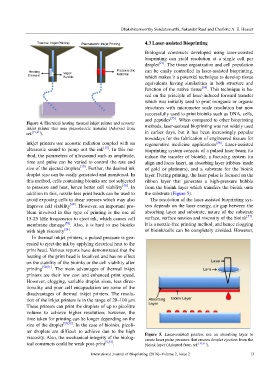
            Figure 4. Electrical heating thermal inkjet printer and acoustic
            inkjet printer that uses piezoelectric material (Adopted from   methods, laser-assisted bioprinting was not widely used
            ref. [19,41] ).                                    in earlier days, but  it has been increasingly popular
                                                               nowadays for the fabrication of engineered tissues for
            inkjet printers use acoustic radiation coupled with an   regenerative medicine  applications [56] . Laser-assisted
            ultrasonic sound to pump out the  ink [19] . In this me-  bioprinting system consists of a pulsed laser beam (to
            thod, the parameters of ultrasound such as amplitude,   induce the transfer of bioink), a focusing system  (to
            time and pulse can be varied to control the rate and   align and focus laser), an absorbing layer (ribbon- made
            size of the ejected droplets [19] . Further, the desired ink   of gold or platinum), and a substrate for the bioink
            droplet size can be easily generated and monitored. In   layer. During printing, the laser pulse is focused on the
            this method, cells containing bioinks are not subjected   ribbon layer  that  generates  a high-pressure bubble
            to pressure and heat, hence better cell viability [48] . In   from the bioink layer which transfers the bioink onto
            addition to this, nozzle-less print heads can be used to   the substrate (Figure 5).
            avoid exposing cells to shear stresses which may also   The resolution of the laser-assisted bioprinting sys-
            improve cell viability [49] . However, an important pro-  tem depends on the laser energy, air gap between the
            blem involved in this  type of printing is the use of   absorbing layer and substrate, nature of the substrate
            15-25 kHz frequencies to eject ink, which causes cell   surface, surface tension and viscosity of the bioink [57] .
            membrane damage  [50] . Also, it is hard to use bioinks   It is a nozzle-free printing method, and hence clogging
            with high viscosity [24] .                         of bioink/cells can be completely avoided. However,
               In thermal inkjet printers, a pulsed pressure is gen-
            erated to eject the ink by applying electrical heat to the
            print head. Various reports have demonstrated that the
            heating of the print head is localized and has no effect
            on the stability of the bioinks or the cell viability after
            printing [50,51] . The main advantages of thermal inkjet
            printers are their low cost and enhanced print speed.
            However, clogging, variable droplet sizes, less direc-
            tionality and poor cell encapsulation are some of the
            disadvantages of thermal inkjet  printers. The resolu-
            tion of the inkjet printers is in the range of 20–100 μm.
            These printers can print the droplets of up to picolitre
            volume to achieve higher resolution;  however, the
            time taken for printing can be longer depending on the
            size of the droplet [20,52] . In the case of bioinks, picoli-
            ter  droplets are difficult to achieve due to the high     Figure 5.  Laser-assisted printers use  an absorbing layer to
            viscosity. Also, the mechanical integrity of the biolog-  create laser pulse pressure that creates droplet ejection from the
            ical constructs could be weak post-print [5,53] .     bioink layer (Adopted from ref. [19,41] ).

                                        International Journal of Bioprinting (2016)–Volume 2, Issue 2      13

