


Page 19 - IJB-2-2
P. 19
Dhakshinamoorthy Sundaramurthi, Sakandar Rauf and Charlotte A. E. Hauser

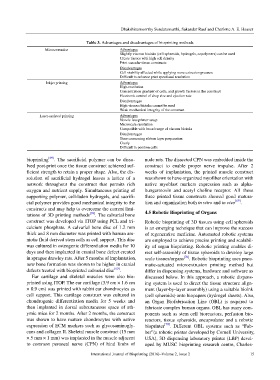
                                      Table 3. Advantages and disadvantages of bioprinting methods

                    Microextrusion                  Advantages
                                                    Slightly viscous bioinks (cell spheroids, hydrogels, copolymers) can be used
                                                    Create tissues with high cell density
                                                    Print vascular tissue constructs
                                                    Disadvantages
                                                    Cell viability affected while applying more extrusion pressure
                                                    Difficult to enhance print speed and resolution
                     Inkjet printing                Advantages
                                                    High resolution
                                                    Concentration gradient of cells, and growth factors in the construct
                                                    Electronic control of drop size and ejection rate
                                                    Disadvantages
                                                    High viscous bioinks cannot be used
                                                    Weak mechanical integrity of the construct
                  Laser-assisted printing           Advantages
                                                    Nozzle-less printer setup
                                                    Microscale resolution
                                                    Compatible with broad range of viscous bioinks
                                                    Disadvantages
                                                    Time consuming ribbon layer preparation
                                                    Costly
                                                    Difficult to position cells

            bioprinting [69] . The sacrificial  polymer can  be disso-  nude rats. The dissected CPN was embedded inside the
            lved post-print once the tissue construct achieved suf-  construct to  enable proper nerve impulse. After 2
            ficient strength to retain a proper shape. Also, the dis-  weeks of implantation, the printed muscle construct
            solution  of sacrificial  hydrogel  leaves  a lattice of  a   was shown to have organized myofiber orientation with
            network throughout the construct that permits rich   native myoblast markers expression such as alpha-
            oxygen and nutrient supply. Simultaneous printing of   bungarotoxin  and acetyl choline receptor.  All  these
            supporting polymer, cell-laden hydrogels, and sacrifi-  three printed tissue constructs  showed  good  matura-
            cial polymer provides good mechanical integrity to the   tion and organization both in vitro and in vivo [69] .
            constructs and may help to overcome the current limi-
            tations of 3D printing methods [69] . The calvarial bone   4.5 Robotic Bioprinting of Organs
            construct was developed via ITOP using PCL and tri-  Robotic bioprinting of 3D tissues using cell spheroids
            calcium phosphate. A calvarial bone disc of 1.2 mm   is an emerging technique that can improve the success
            thick and 8 mm diameter was printed with human am-  of regenerative medicine. Automated robotic systems
            niotic fluid derived stem cells as cell support. This disc   are employed to achieve precise printing and scalabil-
            was cultured in osteogenic differentiation media for 10   ity of organ bioprinting. Robotic printing enables di-
            days and then implanted in cranial bone defect created   rect self-assembly of tissue spheroids to develop large
            in sprague drawley rats. After 5 months of implantation,   scale tissues/organs [70] . Robotic bioprinting uses pneu-
            new bone formation was shown to be higher in cranial   matic-actuated microextrusion printing  method but
            defects treated with bioprinted calvarial disc [69] .     differ in dispensing systems, hardware and software as
               Ear cartilage  and skeletal  muscles were also bio-  discussed below. In this approach, a robotic dispens-
            printed using ITOP. The ear cartilage (3.9 cm × 1.6 cm   ing system is used to direct the tissue structure align-
            × 0.9 cm) was printed with rabbit ear chondrocytes as   ment (layer-by-layer assembly) using a suitable bioink
            cell support. This cartilage construct was cultured in   (cell spheroids) onto biopapers (hydrogel sheets). Also,
            chondrogenic differentiation  media for  5 weeks  and   an Organ Biofabrication  Line (OBL) is required to
            then implanted in  dorsal  subcutaneous space of  ath-  fabricate complex human organs. OBL has many com-
            ymic mice for 2 months. After 2 months, the construct   ponents such as stem cell bioreactors, perfusion bio-
            was shown to have mature chondrocytes with native   reactors, tissue spheroids, encapsulator and a robotic
            expression of ECM markers such as glycosaminogly-  bioprinter [70] .  Different OBL systems such as “Fab-
            cans and collagen II. Skeletal muscle construct (15 mm   ber”(a robotic printer developed by Cornell University,
            × 5 mm × 1 mm) was implanted in the muscle adjacent   USA), 3D dispensing laboratory printer (LBP) devel-
            to common peroneal nerve  (CPN) of  hind limbs of   oped by MUSC bioprinting research centre, Charles-

                                        International Journal of Bioprinting (2016)–Volume 2, Issue 2      15

