


Page 486 - IJB-10-2
P. 486
International Journal of Bioprinting                                Bioprinted skin for testing of therapeutics


            proof-of-concept that human skin equivalents produced,   serum (FBS; Thermo Fisher Scientific, UK). The dermal
            using scalable, automated biofabrication techniques can   samples were incubated using standard culture conditions
            be used as a preclinical tool to predict potential adverse   (37 C with 5% CO ) for 24 h. After 24 h, wells were topped
                                                                 o
                                                                              2
            immune responses of therapeutic antibodies.        up with 5 mL of Media A (Table 1). Dermal dissects were
                                                               observed for  fibroblast  outgrowth  with  media  changed
            2. Materials and methods                           twice weekly. Once significant outgrowth was observed,
                                                               fibroblasts were dissociated using trypsin/EDTA (Sigma-
            2.1. Cell culture                                  Aldrich) using standard culture conditions for 5 min. The
            Full Local Research Ethics Committee (LREC) approval   dissociated fibroblasts were further cultured for up to 7
            was obtained before sourcing healthy volunteer samples   passages. Keratinocytes were dissociated from epidermal
            for this study. After obtaining informed consent, two 4   samples using trypsin/EDTA using standard cell culture
            mm skin biopsies and 60 mL of whole blood were collected   conditions. The resulting cells were further cultured in
            from  healthy  volunteers.  Skin  biopsies  were  rinsed  in   Media B (Table 1) for up to 3 passages with media changed
            phosphate-buffered saline  (PBS;  Sigma-Aldrich, UK),   twice weekly. Lymphoprep™ density gradient medium
            then excess adipose tissue was removed from the skin   (STEMCELL Technologies, UK) was used to isolate human
            biopsies, and the biopsies were incubated in 1.0 U/mL   peripheral blood monocytes (PBMCs) from whole blood
            dispase solution (Scientific Laboratory Supplies, UK) for   sourced from healthy volunteers as previously described. 8
            18 h at 4°C to allow separation of the epidermis from the
            dermis. Once separated, the dermis and epidermis were   2.2. Bioprinting equipment and process
            processed independently. To isolate dermal fibroblasts,   For this study, a Microfab Jetlab 4 XL (Microfab Technologies
            the separated dermal samples were dissected, placed into   Inc., US) printer was retrofitted to accommodate
            6-well plates, and covered with 100 µL of fetal bovine   solenoid VHS series microvalves (Lee Products Ltd., US)


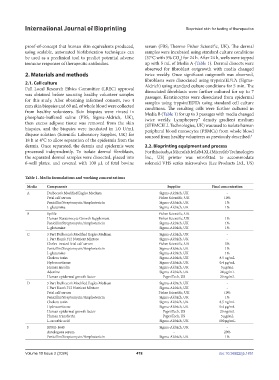
            Table 1. Media formulations and working concentrations

             Media   Components                                         Supplier           Final concentration
             A       Dulbecco’s Modified Eagles Medium               Sigma-Aldrich, UK            -
                     Fetal calf serum                                Fisher Scientific, UK       10%
                     Penicillin/Streptomycin/Amphotericin            Sigma-Aldrich, UK           1%
                     L-glutamine                                     Sigma-Aldrich, UK           1%
             B       Epilife                                         Fisher Scientific, UK        -
                     Human Keratinocyte Growth Supplement            Fisher Scientific, UK       1%
                     Penicillin/Streptomycin/Amphotericin            Sigma-Aldrich, UK           1%
                     L-glutamine                                     Sigma-Aldrich, UK           1%
             C       3 Part Dulbecco’s Modified Eagles Medium        Sigma-Aldrich, UK            -
                     1 Part Ham’s F12 Nutrient Mixture               Sigma-Aldrich, UK            -
                     Chelex-treated fetal calf serum                 Fisher Scientific, UK       5%
                     Penicillin/Streptomycin/Amphotericin            Sigma-Aldrich, UK           1%
                     L-glutamine                                     Sigma-Aldrich, UK           1%
                     Cholera toxin                                   Sigma-Aldrich, UK         8.5 ng/mL
                     Hydrocortisone                                  Sigma-Aldrich, UK         0.4 μg/mL
                     Human insulin                                   Sigma-Aldrich, UK         5 μg/mL
                     Adenine                                         Sigma-Aldrich, UK         24 μg/mL
                     Human epidermal growth factor                     PeproTech, US           20 ng/mL
             D       3 Part Dulbecco’s Modified Eagles Medium        Sigma-Aldrich, UK            -
                     1 Part Ham’s F12 Nutrient Mixture               Sigma-Aldrich, UK            -
                     Fetal calf serum                                Fisher Scientific, UK       10%
                     Penicillin/Streptomycin/Amphotericin            Sigma-Aldrich, UK           1%
                     Cholera toxin                                   Sigma-Aldrich, UK         8.5 ng/mL
                     Hydrocortisone                                  Sigma-Aldrich, UK         0.4 μg/mL
                     Human epidermal growth factor                     PeproTech, US           20 ng/mL
                     Human transferrin                                 PeproTech, US           5 μg/mL
                     L-ascorbic acid                                 Sigma-Aldrich, UK         100 μg/mL
             F       RPMI-1640                                       Sigma-Aldrich, UK            -
                     Autologous serum                                      -                     20%
                     Penicillin/Streptomycin/Amphotericin            Sigma-Aldrich, UK           1%


            Volume 10 Issue 2 (2024)                       478                                doi: 10.36922/ijb.1851

