


Page 499 - IJB-10-2
P. 499
International Journal of Bioprinting                               Mineralization of 3D-printed PHA scaffolds


            2.5. Mechanical properties                         with ethidium homodimer (red). The cells on the scaffolds
            Compression  test  was  evaluated  on  a  universal  testing   were stained for 1 h in an incubator. Cell proliferation
            machine (RB301 UNITECH-M; RnD, Korea) with a 500   was evaluated using the WST-1 assay (Premix WST-1 Cell
            kN load cells and a 5 mm/min crosshead speed. The sample   Proliferation Assay System; Takara Bio, Shiga, Japan). The
            size was 5 × 5 × 3 mm, and the strand size was 400 μm.     cells on the scaffolds were immersed in WST-1 solution
            2.5. Cell culture                                  for 30 min, and the supernatant was measured at 440 nm
            MG63, which is an osteoblast-like cell line, was cultured   with a microplate reader (SpectraMax iD3; Molecular
            in Dulbecco’s modified Eagle’s medium (DMEM; Gibco/  Devices, San Jose, CA, USA). A radioimmunoprecipitation
            Thermo Fisher Scientific, Waltham, MA, USA) with 10%   assay (RIPA) buffer (Pierce RIPA buffer; Thermo Fisher
            fetal  bovine serum and  1%  penicillin  (Gibco).  The cells   Scientific) was used to lyse the cells of the scaffold for
            were cultured at 37℃ under 5% CO  conditions.      alkaline phosphatase (ALP) extraction, and the cells were
                                        2
                                                               preserved at -80°C. The ALP kit was utilized according to
            2.6. Cell viability, proliferation, and differentiation   the manufacturer’s instructions. Picogreen dsDNA assay
            on a functionalized PHA biopolymer scaffold        (Quant-iT™ PicoGreen™ dsDNA Assay Kit; Invitrogen/
            The cells were seeded on the PHA biopolymer scaffolds, and   Thermo Fisher Scientific, Waltham, MA, USA) was used to
            the scaffolds were evaluated for cell survival, proliferation,   normalize the ALP activity.
            and differentiation. The scaffold was sterilized for 1 min
            using 70% ethanol, followed by a phosphate-buffered   2.7. Statistical analysis
            saline wash. MG63 cells (5 ×  10 cells/mL)  were seeded   All quantitative data are presented as mean ± standard
                                       5
            on each sample and cultured for 7 days for viability and   deviation. One-way analysis of variance (ANOVA) was
            proliferation, and for 10 days for differentiation.  used to analyze the results, followed by Tukey’s post-hoc
               Viability was investigated using a live/dead assay kit   test. Asterisks in the figures denote significant values (p
            (Live and Dead Kit, Invitrogen, USA) containing calcein   < 0.05). Statistical analysis was performed using Origin
            AM and ethidium homodimer-1. Live cells were stained   software (ver. 8.6; OriginLab Corporation, Northampton,
            with calcium AM (green), and dead cells were labeled   MA, USA).


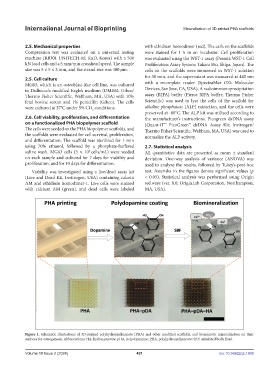
            Figure 1. Schematic illustrations of 3D-printed polyhydroxyalkanoate (PHA) and other modified scaffolds, and biomimetic mineralization on their
            surfaces for osteogenesis. Abbreviations: HA, hydroxyapatite; pDA, polydopamine; PHA, polyhydroxyalkanoate; SBF: simulated body fluid.


            Volume 10 Issue 2 (2024)                       491                                doi: 10.36922/ijb.1806

