


Page 61 - IJB-3-1
P. 61
3D bioprinting of stem cells and polymer/bioactive glass composite scaffolds for bone tissue engineering


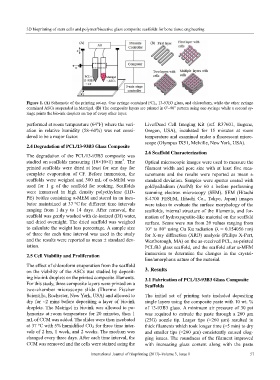
            Figure 1. (A) Schematic of the printing set-up. One syringe contained PCL, 13-93B3 glass, and chloroform, while the other syringe
                                                                           o
                                                                        o
            contained ASCs suspended in Matrigel. (B) The composite layers are printed in 0 –90  pattern using one syringe while a second sy-
            ringe prints the bio-ink droplets on top of every other layer.
            performed at room temperature (64°F) where the vari-  Live/Dead  Cell  Imaging  Kit  (ref.  R37601,  Eugene,
            ation  in  relative  humidity  (58–60%)  was  not  consi-  Oregon,  USA),  incubated  for  15  minutes  at  room
            dered to be a major factor.                        temperature and examined under a fluorescent micro-
                                                               scope (Olympus IX51, Melville, New York, USA).
            2.4 Degradation of PCL/13-93B3 Glass Composite
                                                               2.6 Scaffold Characterization
            The degradation of the PCL/13-93B3 composite was
                                                     3
            studied on scaffolds measuring (10×10×1) mm . The   Optical microscopic images were used to measure the
            printed  scaffolds  were  dried  at  least  for  one  day  for   filament  width  and  pore  size  with  at  least  five  mea-
            complete  evaporation  of  CF.  Before  immersion,  the   surements  and  the  results  were  reported  as  mean  ±
            scaffolds were weighed and 300 mL of α-MEM was     standard deviation. Samples were sputter coated with
            used  for  1  g  of  the  scaffold  for  soaking.  Scaffolds   gold/palladium  (Au/Pd)  for  60  s  before  performing
            were  immersed  in  high  density  polyethylene  (HD-  scanning  electron  microscopy  (SEM).  SEM  (Hitachi
            PE) bottles containing α-MEM and stored in an incu-  S-4700  FESEM,  Hitachi  Co.,  Tokyo,  Japan)  images
            bator  maintained  at 37 °C for  different  time  intervals   were taken to evaluate the surface morphology of the
            ranging  from  1 da y  to  14  days.  After  removal,  the   scaffolds, internal structure of the filaments, and for-
            scaffold was gently washed with de-ionized (DI) water,   mation of hydroxyapatite-like material on the scaffold
            and dried overnight. The dried scaffold was weighed   surface. Scans were run from 2θ values ranging from
            to calculate the weight loss percentage. A sample size   10° to 80° using Cu Kα radiation (λ = 0.154056 nm)
            of three for each time interval was used in the study   for X-ray diffraction (XRD) analysis (Philips X-Pert,
            and the results were reported as mean ± standard dev-  Westborough, MA) on the as-received PCL, as-printed
            iation.                                            PCL/B3 glass scaffold, and the scaffold after α-MEM

            2.5 Cell Viability and Proliferation               immersion  to  determine  the  changes  in  the  crystal-
                                                               line/amorphous nature of the material.
            The effect of chloroform evaporation from the scaffold
            on the viability of the ASCs was studied by deposit-  3. Results
            ing bio-ink droplets on the printed composite filaments.   3.1 Fabrication of PCL/13-93B3 Glass Composite
            For this study, three composite layers were printed on a   Scaffolds
            two-chamber  microscope  slide  (Thermo  Fischer
            Scientific, Rochester, New York, USA) and allowed to   The  initial  set  of  printing  tests  included  depositing
            dry  for  ~2  mins before depositing  a  layer of bio-ink   single layers using the composite paste with 10 wt. %
            droplets. The Matrigel in bio-ink was allowed to po-  of 13-93B3 glass. A minimum air pressure of 30 psi
            lymerize at room temperature for 20 minutes, then 1   was  required to extrude  the  paste through  a  260  μm
            mL of CCM was added. The slides were then incubated   (25G)  nozzle  tip.  Larger  tips  (>260  µm)  resulted  in
            at 37 °C with 5% humidified CO 2 for three time inter-  thick filaments which took longer time (>5 min) to dry
            vals of 2 hrs, 1 week, and 2 weeks. The medium was   and smaller tips (<260 µm) consistently caused clog-
            changed every three days. After each time interval, the   ging issues. The roundness of the filament improved
            CCM was removed and the cells were stained using the   with  increasing  glass  content  along  with  the  paste

                                        International Journal of Bioprinting (2017)–Volume 3, Issue 1      57

