


Page 574 - IJB-10-3
P. 574
International Journal of Bioprinting                                         Bioprint micro breast cancer


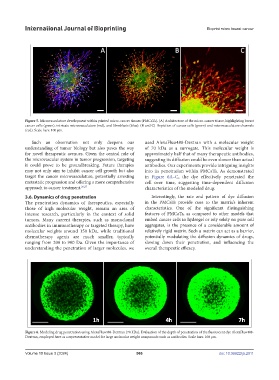
            Figure 5. Microvasculature development within printed micro-cancer tissues (PMCaTs). (A) Architecture of the micro-cancer tissue, highlighting breast
            cancer cells (green), intricate microvasculature (red), and fibroblasts (blue). (B and C) Depiction of cancer cells (green) and microvasculature channels
            (red). Scale bars: 100 μm.

               Such an observation not only deepens our        used AlexaFluo488-Dextran with a molecular weight
            understanding of tumor biology but also paves the way   of 70 kDa as a surrogate. This molecular weight is
            for novel therapeutic avenues. Given the central role of   approximately half that of many therapeutic antibodies,
            the microvascular system in tumor progression, targeting   suggesting its diffusion could be even slower than actual
            it could prove  to be groundbreaking. Future therapies   antibodies. Our experiments provide intriguing insights
            may not only aim to inhibit cancer cell growth but also   into  its  penetration  within PMCaTs. As demonstrated
            target  the  cancer  microvasculature,  potentially  arresting   in  Figure 6A–C, the dye effectively penetrated the
            metastatic progression and offering a more comprehensive   cell over time, suggesting time-dependent diffusion
            approach to cancer treatment. 26,27                characteristics of the modeled drug.

            3.6. Dynamics of drug penetration                     Interestingly, the rate and pattern of dye diffusion
            The  penetration  dynamics  of  therapeutics,  especially   in the PMCaTs provide cues to the matrix’s inherent
            those of high molecular weight, remain an area of   characteristics. One of the significant distinguishing
            intense research, particularly in the context of solid   features of PMCaTs, as compared to other models that
            tumors. Many current therapies, such as monoclonal   embed cancer cells in hydrogel or rely solely on pure cell
            antibodies in immunotherapy or targeted therapy, have   aggregates, is the presence of a considerable amount of
            molecular  weights  around 150 kDa, while  traditional   relatively rigid matrix. Such a matrix can act as a barrier,
            chemotherapy agents are much smaller, typically    potentially modulating the diffusion dynamics of drugs,
            ranging from 200 to 900 Da. Given the importance of   slowing down their penetration, and influencing the
            understanding the penetration of larger molecules, we   overall therapeutic efficacy.


            Figure 6. Modeling drug penetration using AlexaFluo488-Dextran (70 kDa). Evaluation of the depth of penetration of the fluorescent dye AlexaFluo488-
            Dextran, employed here as a representative model for large molecular weight compounds such as antibodies. Scale bars: 100 μm.


            Volume 10 Issue 3 (2024)                       566                                doi: 10.36922/ijb.2911

