


Page 571 - IJB-10-3
P. 571
International Journal of Bioprinting                                         Bioprint micro breast cancer


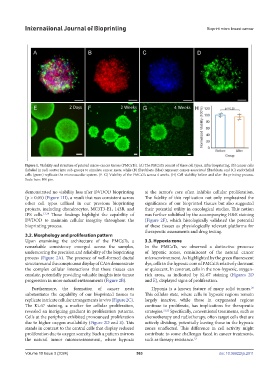
            Figure 1. Viability and structure of printed micro-cancer tissues (PMCaTs). (A) The PMCaTs consist of three cell types. After bioprinting, (B) cancer cells
            (labeled in red) scatter into sub-groups to simulate cancer nests, while (B) fibroblasts (blue) represent cancer-associated fibroblasts, and (C) endothelial
            cells (green) replicate the microvascular system. (E–G) Viability of the PMCaTs across 4 weeks. (H) Cell viability before and after the printing process.
            Scale bars: 100 μm.

            demonstrated no viability loss after DVDOD bioprinting   at the tumor’s core often inhibits cellular proliferation.
            (p > 0.05) (Figure 1H), a result that was consistent across   The fidelity of this replication not only emphasized the
            other cell types utilized in our previous bioprinting   significance of our bioprinted tissues but also suggested
            projects, including chondrocytes, MC3T3-E1, 143B, and   their potential utility in oncological studies. This notion
            IPS cells. 13,14  These findings highlight the capability of   was further solidified by the accompanying H&E staining
            DVDOD to maintain cellular integrity throughout the   (Figure  2F), which histologically  validated  the potential
            bioprinting process.                               of these tissues as physiologically relevant platforms for
                                                               therapeutic assessments and drug testing.
            3.2. Morphology and proliferation pattern
            Upon examining the architecture of the PMCaTs, a   3.3. Hypoxia zone
            remarkable  consistency  emerged  across  the  samples,   In the PMCaTs, we observed a distinctive presence
            underscoring the precision and reliability of the bioprinting   of hypoxic  zones, reminiscent of the natural cancer
            process (Figure 2A). The presence of well-formed ductal   microenvironment. As highlighted by the green fluorescent
            structures and the conspicuous display of CAFs demonstrate   dye, cells in the hypoxic core of PMCaTs relatively dormant
            the complex cellular interactions that these tissues can   or quiescent. In contrast, cells in the non-hypoxic, oxygen-
            emulate, potentially providing valuable insights into tumor   rich areas, as indicated by Ki-67 staining (Figures 2D
            progression in more natural environments (Figure 2B).  and E), displayed signs of proliferation.
               Furthermore, the formation of cancer nests         Hypoxia is a  known  feature of  many solid  tumors.
                                                                                                            20
            substantiates  the  capability  of  our  bioprinted  tissues  to   This cellular state, where cells in hypoxic regions remain
            replicate intricate cellular arrangements in vivo (Figure 2C).   largely inactive, while those in oxygenated regions
            The Ki-67 staining, a marker for cellular proliferation,   continue to proliferate, has implications for therapeutic
            revealed an intriguing gradient in proliferation patterns.   strategies. 21,22  Specifically, conventional treatments, such as
            Cells at the periphery exhibited pronounced proliferation   chemotherapy and radiotherapy, often target cells that are
            due to higher oxygen availability (Figure 2D and E). This   actively dividing, potentially leaving those in the hypoxic
            stands in contrast to the central cells that display reduced   zones unaffected. This difference in cell activity might
            proliferation due to oxygen scarcity. Such a pattern mirrors   contribute to some challenges faced in cancer treatments,
            the natural tumor microenvironment, where hypoxia   such as therapy resistance. 23


            Volume 10 Issue 3 (2024)                       563                                doi: 10.36922/ijb.2911

