


Page 576 - IJB-10-3
P. 576
International Journal of Bioprinting                                         Bioprint micro breast cancer


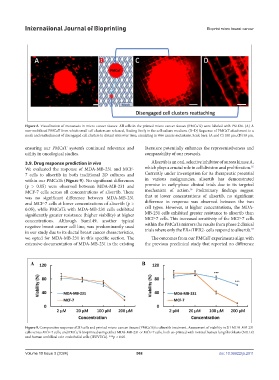
            Figure 8. Visualization of metastasis in micro-cancer tissues. All cells in the printed micro-cancer tissues (PMCaTs) were labeled with PKH26. (A) A
            non-mobilized PMCaT from which small cell clusters are released, floating freely in the cell culture medium. (B–D) Sequence of PMCaT attachment to a
            mesh and reattachment of disengaged cell clusters to distant sites over time, emulating in vivo cancer metastasis. Scale bars: (A and C) 100 μm; (D) 50 μm.

            ensuring our PMCaT system’s continued relevance and   literature potentially enhances the representativeness and
            utility in oncological studies.                    comparability of our research.
            3.9. Drug response prediction in vivo                 Alisertib is an oral, selective inhibitor of aurora kinase A,
                                                                                                            35
            We evaluated the response of MDA-MB-231 and MCF-   which plays a crucial role in cell division and proliferation.
            7 cells to alisertib in  both traditional  2D cultures and   Currently under investigation for its therapeutic potential
            within our PMCaTs (Figure 9). No significant differences   in various malignancies, alisertib has demonstrated
            (p > 0.05) were observed between MDA-MB-231 and    promise in  early-phase clinical  trials  due to its  targeted
                                                                                  36
            MCF-7 cells across all concentrations of alisertib. There   mechanism of action.  Preliminary findings suggest
            was no significant difference between MDA-MB-231   that at lower concentrations of alisertib, no significant
            and MCF-7 cells at lower concentrations of alisertib (p >   difference in response was observed between the two
            0.05), while PMCaTs with MDA-MB-231 cells exhibited   cell types. However, at higher concentrations, the MDA-
            significantly greater resistance (higher viability) at higher   MB-231 cells exhibited greater resistance to alisertib than
            concentrations. Although Sum149, another typical   MCF-7 cells. This increased sensitivity of the MCF-7 cells
            negative breast cancer cell line, was predominantly used   within the PMCaTs mirrors the results from phase 2 clinical
                                                                                                            37
            in our study due to its ductal breast cancer characteristics,   trials where only the ER+/HER2- cells respond to alisertib.
            we opted for MDA-MB-231 in this specific section. The   The outcomes from our PMCaT experiments align with
            extensive documentation of MDA-MB-231 in the existing   the previous preclinical study that reported no difference


            Figure 9. Comparative response of 2D cells and printed micro-cancer tissues (PMCaTs) to alisertib treatment. Assessment of viability in 2D MDA-MB-231
            cells versus MCF-7 cells, and PMCaTs bioprinted using either MDA-MB-231 or MCF-7 cells, both co-printed with normal human lung fibroblasts (NHLF)
            and human umbilical vein endothelial cells (HUVECs). ***p < 0.05.


            Volume 10 Issue 3 (2024)                       568                                doi: 10.36922/ijb.2911

