


Page 26 - IJB-10-5
P. 26
International Journal of Bioprinting                                3D bioprinting for nanoparticle evaluation


            in the outer matrix of these scaffolds provided additional   7.1. Three-dimensional bioprinted colitis-mimicking
            mechanical support and bioactivity, leading to improved   model for evaluation of albumin nano-encapsulated
            outcomes in terms of cell proliferation and mineralization.   anti-inflammatory drugs
            By incorporating bioglass into the bioprinted scaffolds,   Almutary et al.  conducted an insightful study leveraging
                                                                           101
            the study demonstrates a significant enhancement in the   3D bioprinting technology to develop a colitis-mimicking
            biomineralization capabilities of SaOS-2 cells, providing   model, aiming to assess epithelial barrier function using
            a valuable strategy for the development of advanced,   albumin nano-encapsulated anti-inflammatory drugs. The
            biocompatible implants. 92                         research addresses a significant gap in drug development:
                                                               the lack of effective preclinical models that accurately
            7. Three-dimensional bioprinted inflamma-          replicate the physiological conditions of the human
            tory disease model                                 intestine, which often  leads  to poor predictions  of  drug
                                                               efficacy and toxicity. The study utilized 3D bioprinting
            Three-dimensional bioprinting technology has  emerged   to create a model that closely mimics the intestinal
            as a crucial tool in the study of inflammatory diseases. 93–95    environment under colitis conditions. The authors
            This  technology  enables  the  creation  of  models  that   employed Caco-2 and HT-29 colon cancer cell lines, which
            surpass traditional 2D culture systems by replicating the   are standard in studies of intestinal function. These cells
            complex structures and environments of actual human   were incorporated into a bioink and bioprinted using the
                 96
            tissues.  Such models allow for a more precise analysis   INKREDIBLE bioprinter, which offers precise control
            of inflammatory responses and interactions between   over the printing process. The bioprinter used pneumatic
            immune cells. They are particularly useful in studying   pressure to extrude cell-laden hydrogel strands, creating a
            inflammatory  bowel  diseases,  Crohn’s  disease,  colitis,   layered structure that closely resembles the architecture of
            and other related conditions, facilitating the evaluation   the intestinal epithelium. One of the key advantages of 3D
            of new anti-inflammatory treatments. 97–99  By accurately   bioprinting highlighted in the study is its ability to control
            mimicking the pathological features of inflammatory   cell shape and spatial organization, which are crucial for
            diseases, 3D bioprinting enhances the preclinical testing   accurate physiological modeling.  Traditional 2D cell
                                                                                          100
            phase, providing reliable data on the efficacy and safety of   cultures fail to replicate the complex interactions and 3D
            drugs before they enter clinical trials.           structure of tissues, leading to less reliable data. In contrast,


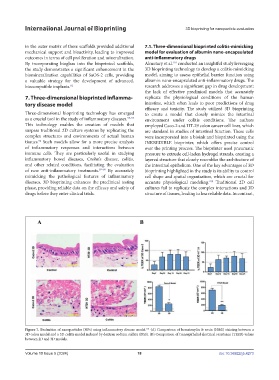
            Figure 7. Evaluation of nanoparticles (NPs) using inflammatory disease model.  (A) Comparison of hematoxylin & eosin (H&E) staining between a
                                                               101
            3D colon model and a 3D colitis model induced by dextran sodium sulfate (DSS). (B) Comparison of transepithelial electrical resistance (TEER) values
            between 2D and 3D models.

            Volume 10 Issue 5 (2024)                        18                                doi: 10.36922/ijb.4273

