


Page 142 - IJB-7-4
P. 142
3D-Printed  Anti-Tumor Scaffolds
           A                       B


                                                                     A


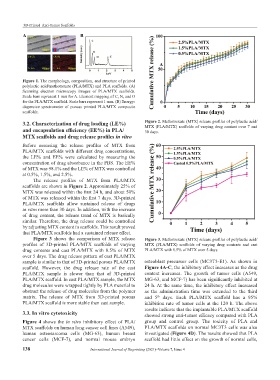
           Figure 1. The morphology, composition, and structure of printed
           polylactic acid/methotrexate (PLA/MTX) and PLA scaffolds. (A)
           Scanning  electron  microscopy  images  of  PLA/MTX  scaffolds.
           Scale bars represent 1 mm for A. Element mapping of C, N, and O
           for the PLA/MTX scaffold. Scale bars represent 1 mm. (B) Energy-
           dispersive  spectrometer  of  porous  printed  PLA/MTX  composite
           scaffolds.

           3.2. Characterization of drug loading (LE%)         Figure 2. Methotrexate (MTX) release profiles of polylactic acid/
                                                               MTX (PLA/MTX) scaffolds of varying drug content over 7 and
           and encapsulation efficiency (EE%) in PLA/          30 days.
           MTX scaffolds and drug release profiles in vitro

           Before  assessing  the  release  profiles  of  MTX  from
           PLA/MTX scaffolds with different drug concentrations,
           the  LE%  and  EE%  were  calculated  by  measuring  the
           concentration of drug absorbance in the PBS. The EE%
           of MTX was 98.1% and the LE% of MTX was controlled
           at 0.5%, 1.5%, and 2.5%.
               The  release  profiles  of  MTX  from  PLA/MTX
           scaffolds are shown in Figure 2. Approximately 25% of
           MTX was released within the first 24 h, and about 50%
           of MTX was released within the first 7 days. 3D-printed
           PLA/MTX  scaffolds  allow  sustained  release  of  drugs
           in vitro more than 30 days. In addition, with the increase
           of  drug  content,  the  release  trend  of  MTX  is  basically
           similar. Therefore, the drug release could be controlled
           by adjusting MTX content in scaffolds. This result proved
           that PLA/MTX scaffolds had a sustained release effect.
               Figure  3  shows  the  comparison  of  MTX  release   Figure 3. Methotrexate (MTX) release profiles of polylactic acid/
           profiles  of  3D-printed  PLA/MTX  scaffolds  of  varying   MTX  (PLA/MTX)  scaffolds  of  varying  drug  contents  and  cast
           drug  contents  and  cast  PLA/MTX  with  0.5%  of  MTX   PLA/MTX with 0.5% of MTX over 5 days.
           over 5 days. The drug release pattern of cast PLA/MTX
           sample is similar to that of 3D-printed porous PLA/MTX   osteoblast  precursor  cells  (MC3T3-E1).  As  shown  in
           scaffold.  However,  the  drug  release  rate  of  the  cast   Figure 4A-C, the inhibitory effect increases as the drug
           PLA/MTX  sample  is  slower  than  that  of  3D-printed   content  increases.  The  growth  of  tumor  cells  (A549,
           PLA/MTX scaffold. In cast PLA/MTX sample, the MTX   MG-63, and MCF-7) has been significantly inhibited at
           drug molecules were wrapped tightly by PLA material to   24 h. At the same time, the inhibitory effect increased
           obstruct the release of drug molecules from the polymer   as  the  administration  time  was  extended  to  the  third
           matrix.  The  release  of  MTX  from  3D-printed  porous   and  5   days.  Each  PLA/MTX  scaffold  has  a  95%
                                                                    th
           PLA/MTX scaffold is more stable than cast sample.   inhibition rate of tumor cells at the 120 h. The above
                                                               results indicate that the implantable PLA/MTX scaffold
           3.3. In vitro cytotoxicity                          showed strong anti-tumor efficacy compared with PLA
           Figure 4 shows the in vitro inhibitory effect of PLA/  group  and  control  group.  The  toxicity  of  PLA  and
           MTX scaffolds on human lung cancer cell lines (A549),   PLA/MTX scaffolds on normal MC3T3 cells was also
           human  osteosarcoma  cells  (MG-63),  human  breast   investigated (Figure 4D). The results showed that PLA
           cancer  cells  (MCF-7),  and  normal  mouse  embryo   scaffold had little effect on the growth of normal cells,

           138                         International Journal of Bioprinting (2021)–Volume 7, Issue 4

