


Page 175 - IJB-8-4
P. 175
Chen, et al.
           Table 2. Errors of five random samples between the design parameter and the actual measurement after printing
           Random sample        Suture        Bone        Pitch (anchor    Pitch (taper   Anchor      Anchor
                                 hole      growth hole        body)          head)        Length      diameter
           Design value (mm)     0.800        0.600           2.10            1.05         16.00        5.50
           RS1                   0.792        0.638           2.14            1.00         15.96        5.79
           RS2                   0.783        0.629           2.21            1.07         15.92        5.73
           RS3                   0.788        0.626           2.05            1.02         15.91        5.75
           RS4                   0.792        0.653           2.21            1.01         15.94        5.69
           RS5                   0.783        0.622           2.07            1.05         15.89        5.72
           Ave                  0.7876       0.6336           2.136           1.03        15.924       5.736
           Std                  0.0045       0.0123           0.075          0.0291       0.0270       0.0371
           Err (%)               1.55          5.6             1.7             1.9          0.5         4.3


            A                                                  A                      B


            B                                     C


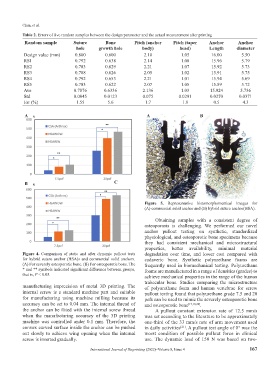
                                                               Figure  5.  Representative  histomorphometrical  images for
                                                               (A) commercial solid anchor and (B) hybrid suture anchor(HSA).


                                                                   Obtaining samples with a consistent degree of
                                                               osteoporosis is challenging.  We performed our novel
                                                               anchor pullout testing on synthetic,  standardized
                                                               physiological, and osteoporotic bone specimens because
                                                               they had consistent  mechanical  and microstructural
                                                               properties,  better  availability,  minimal  material
           Figure  4.  Comparison of static  and after  dynamic  pullout  tests   degradation over time, and lower cost compared with
           for hybrid suture anchor (HSA)s and commercial solid anchors.   cadaveric  bone. Synthetic  polyurethane  foams are
           (A) For severely osteoporotic bone. (B) For osteoporotic bone. The   frequently used in biomechanical testing. Polyurethane
           * and ** symbols indicated significant difference between groups,   foams are manufactured in a range of densities (grades) to
           that is, P < 0.05.
                                                               achieve mechanical properties in the range of the human
                                                               trabecular  bone. Studies comparing  the microstructure
           manufacturing imprecision of metal 3D printing.  The   of polyurethane  foam  and  human  vertebrae  for screw
           internal screw is a standard machine part and suitable   pullout testing found that polyurethane grade 7.5 and 20
           for manufacturing using machine milling because its   pcfs can be used to mimic the severely osteoporotic bone
           accuracy can be set to 0.04 mm. The internal thread of   and osteoporotic bone [17,18,20] .
           the anchor can be fitted with the internal screw thread   A pullout constant extension rate of 12.5  mm/s
           when the manufacturing accuracy of the 3D printing   was set according to the literature to be approximately
           machine  was  controlled  under  0.1  mm. Therefore,  the   one-third of the 33 mm/s rate of arm movement used
           convex curved surface inside the anchor can be pushed   in daily activities [21] . A pullout test angle of 0° was the
           out slowly to achieve wing opening when the internal   worst condition of possible pullout force in clinical
           screw is inserted gradually.                        use. The  dynamic  load  of  150  N  was  based  on  two-

                                       International Journal of Bioprinting (2022)–Volume 8, Issue 4       167

