


Page 177 - IJB-8-4
P. 177
Chen, et al.
            A                                                  osseointegration in animal experiments and requires
                                                               long-term evaluation.
                                                                   Our study has some limitations. The central hexagonal
                                                               driver within the specific sleeve instrument was used to drive
                                                               the internal screw to open the wing mechanism. However,
                                                               only 2-mm hexagonal head of the central driver must be
                                                               carefully under appropriate insertion force to prevent the
                                                               head from slipping or breaking and make it impossible to
                                                               push the wings away. Furthermore, our animal experiments
                                                               focused on the normal bone to evaluate the functionality
                                                               of osseointegration after anchor implantation. A  detailed
                                                               animal model of osteoporosis needs to be used to evaluate
                                                               whether the failure strength of the newly-designed anchor is
                                                               improved and the state of osseointegration.
            B
                                                               5. Conclusion
                                                               A novel HSA with wing structure mechanism with dual-
                                                               threaded was developed integrating 3D printing and
                                                               mechanic milling and the wing of HSA can be opened by an
                                                               internal screw to increase the holding power for osteoporosis
                                                               patient when necessary. Results of static and after dynamic
                                                               load pullout tests for severe and normal osteoporosis
                                                               showed that the failure strengths of HSA with and without
                                                               the wing open were significantly higher (P <  0.05) than
                                                               that of CSA. Histomorphometrical evaluation revealed that
                                                               the effects of new bone ingrowth along the anchor contour
                                                               for CSA and HSA were both approximately 20%, with no
                                                               statistically significant difference.

                                                               Funding
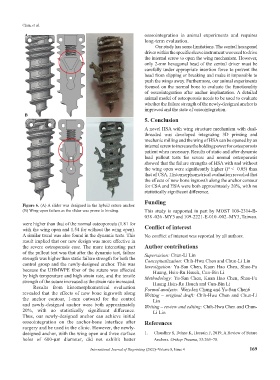
           Figure 6. (A) A slider was designed in the hybrid suture anchor.
           (B) Wing-open failure as the slider was prone to binding.  This study is supported in part by MOST 109-2314-B-
                                                               038 -026 -MY3 and 109-2221-E-010 -002 -MY3, Taiwan.
           were higher than that of the normal osteoporosis (1.81 for   Conflict of interest
           with the wing open and 1.54 for without the wing open).
           A similar trend was also found in the dynamic tests. This   No conflict of interest was reported by all authors.
           result implied that our new design was more effective in
           the severe osteoporosis case.  The more interesting part   Author contributions
           of the pullout test was that after the dynamic test, failure   Supervision: Chun-Li Lin
           strength was higher than static failure strength for both the   Conceptualization: Chih-Hwa Chen and Chun-Li Lin
           control group and the newly-designed anchor. This was   Investigation: Yu-San  Chen,  Kuan  Hao  Chen,  Shao-Fu
           because the UHMWPE fiber of the suture was affected    Huang, Hsin-Ru Hsueh, Cun-Bin Li
           by high temperature and high strain rate, and the tensile   Methodology: Yu-San Chen, Kuan Hao Chen, Shao-Fu
           strength of the suture increased as the strain rate increased.  Huang Hsin-Ru Hsueh and Cun-Bin Li
               Results from histomorphometrical evaluation     Formal analysis:  Wen-Jen Chang and Yu-San Chen6
           revealed  that  the  effects  of  new  bone  ingrowth  along   Writing – original draft: Chih-Hwa Chen and Chun-Li
           the anchor contour, 1-mm outward for the control       Lin
           and  newly-designed  anchor  were  both  approximately   Writing – review and editing: Chih-Hwa Chen and Chun-
           20%,  with  no  statistically  significant  difference.   Li Lin
           Thus,  our  newly-designed  anchor  can  achieve  initial
           osseointegration on the  anchor-bone interface after   References
           surgery and be used in the clinic. However, the newly-
           designed anchor, with the wing open and three surface   1.   Chaudhry S, Dehne K, Hussain F, 2019, A Review of Suture
           holes of 600-μm diameter, did not exhibit better        Anchors. Orthop Trauma, 33:263–70.

                                       International Journal of Bioprinting (2022)–Volume 8, Issue 4       169

