


Page 230 - IJB-9-1
P. 230
International Journal of Bioprinting                         Cellulose-based bio-inks for bone and cartilage TE


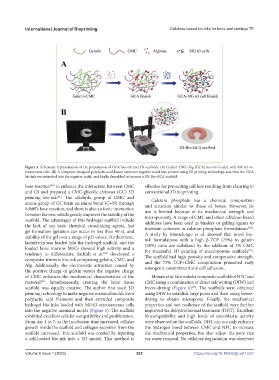
            Figure 5. Schematic representation of the preparation of GCA bio-ink and 3D scaffolds. (A) Gelatin-CMC-Alg (GCA) bio-ink loaded with MG 63 os-
            teosarcoma cells. (B) A computer-designed polylactic acid-based meniscus negative mold was printed using 3D printing technology, and then the GCA
            bio-ink was extruded into the negative mold, and finally demolded to become a 3D-Bio-GCA scaffold.

            base reaction  to enhance the interaction between CMC   effective for preventing cell loss resulting from shearing in
                      [80]
            and CS and prepared a CMC-glycolic chitosan (GC) 3D   conventional 3D bioprinting.
            printing bio-ink . The aldehyde group of CMC and      Calcium  phosphate  has  a  chemical  composition
                         [81]
            amine group of GC form an imine bond (C=N) through   and structure similar to those of bones. However, its
            Schiff’s base reaction, and there is also an ionic interaction   use is limited because of its mechanical strength and
            between the two, which greatly improves the stability of the   microporosity. A range of CMC and other cellulose-based
            scaffold. The advantages of this hydrogel scaffold include   additives have been used as binders or gelling agents to
            the lack of any toxic chemical crosslinking agents, fast   maintain cohesion in calcium phosphate formulations .
                                                                                                           [84]
            gel formation (gelation can occur in less than 40 s), and   A study by Montelongo  et  al. showed that novel bio-
            stability of the gel over a range of pH values. Furthermore,   ink formulations with a high β-TCP (75%) to gelatin
            lactoferrin was loaded into the hydrogel scaffold, and the   (25%) ratio are stabilized by the addition of 3% CMC
            loaded bone marrow MSCs showed high activity and a   for successful 3D printing of macroporous scaffolds .
                                                                                                           [85]
            tendency to differentiate. Sathish  et  al.  developed a   The scaffold had high porosity and compressive strength,
                                             [82]
            composite trimeric bio-ink comprising gelatin, CMC, and   and the 75% TCP+CMC composition promoted early
            Alg.  Additionally,  the electrostatic  attraction caused by   osteogenic commitment and cell adhesion.
            the positive charge of gelatin versus the negative charge
            of CMC enhances the mechanical characteristics of the   Mohan et al. fabricated a composite scaffold of NFC and
            material . Simultaneously, creating the bone tissue   CMC using a combination of direct ink writing (DIW) and
                  [83]
            scaffold was equally creative. The author first used 3D   freeze-drying  (Figure  6) .  The scaffolds  were  obtained
                                                                                   [86]
            printing technology to make negative meniscal molds from   using DIW to establish large pores and then using freeze-
            polylactic acid filaments and then extruded composite   drying to obtain micropores. Finally, the mechanical
            hydrogel bio-inks loaded with MG63-osteosarcoma cells   properties and wet resilience of the scaffold were further
            into the negative meniscal molds (Figure 5). The scaffold   improved via dehydrothermal treatment (DHT). Excellent
            exhibited excellent cellular compatibility and proliferation.   biocompatibility and high levels of osteoblastic activity
            From day 1 to 7, as the incubation time increased, cellular   were observed on the scaffolds. DHT can not only enhance
            growth inside the scaffold and collagen secretion from the   the hydrogen bond between CMC and NFC to increase
            scaffold increased. This scaffold was created by injecting   the mechanical properties, but also adjust the pore size
            a cell-loaded bio-ink into a 3D model. This method is   via water removal. No cellulose degradation was observed


            V                                              222                      https://doi.org/10.18063/ijb.v9i1.637
            Volume 9 Issue 1 (2023)olume 9 Issue 1 (2023)

