


Page 399 - IJB-9-2
P. 399
International Journal of Bioprinting                               In situ 3D bioprinter for skin wound healing


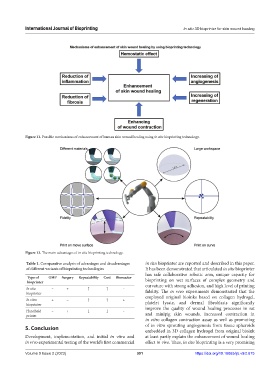
            Figure 11. Possible mechanisms of enhancement of human skin wound healing using in situ bioprinting technology.


            Figure 12. The main advantages of in situ bioprinting technology.

            Table 1. Comparative analysis of advantages and disadvantages   in situ bioprinter are reported and described in this paper.
            of different variants of bioprinting technologies  It has been demonstrated that articulated in situ bioprinter
                                                               has safe collaborative robotic arm, unique capacity for
             Type of   GMP  Surgery  Repeatability  Cost  Bioreactor
             bioprinter                                        bioprinting on wet surfaces of complex geometry and
            In situ    –     +        ↑       ↑      -         curvature with strong adhesion, and high level of printing
            bioprinter                                         fidelity. The  in vivo experiments demonstrated that the
            In vitro   +     –        ↑       ↑      +         employed original bioinks based on collagen hydrogel,
            bioprinter                                         platelet lysate, and dermal fibroblasts significantly
            Handheld   –     +        ↓       ↓      -         improve the quality of wound healing processes in rat
            printer                                            and minipig skin wounds. Increased contraction in
                                                               in  vitro collagen contraction assay as well as promoting
            5. Conclusion                                      of  in vitro  sprouting  angiogenesis  from  tissue  spheroids
                                                               embedded in 3D collagen hydrogel from original bioink
            Development, implementation, and initial  in vitro and   at least partly explain the enhancement of wound healing
            in vivo experimental testing of the world’s first commercial   effect in vivo. Thus, in situ bioprinting is a very promising

            Volume 9 Issue 2 (2023)                        391                      https://doi.org/10.18063/ijb.v9i2.675

