


Page 396 - IJB-9-2
P. 396
International Journal of Bioprinting                               In situ 3D bioprinter for skin wound healing


                         A                                          B


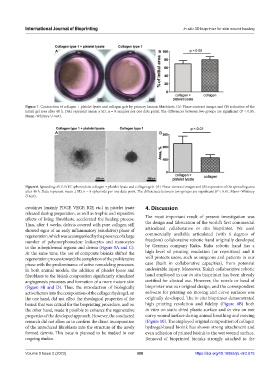
            Figure 7. Contraction of collagen + platelet lysate and collagen gels by primary human fibroblasts. (A) Phase-contrast images and (B) reduction of the
            initial gel area after 48 h. Data represent mean ± SD, n = 8 samples per one data point. The differences between two groups are significant (P < 0.05,
            Mann–Whitney U-test).


                         A                                           B


            Figure 8. Spreading of HUVEC spheroids in collagen + platelet lysate and collagen gels. (A) Phase-contrast images and (B) expansion of the spreading area
            after 48 h. Data represent mean ± SD, n = 8 spheroids per one data point. The differences between two groups are significant (P < 0.01, Mann–Whitney
            U-test).

            cytokines (mainly PDGF, VEGF, IGF, etc.) in platelet lysate   4. Discussion
            released during preparation, as well as trophic and reparative
            effects  of  living  fibroblasts,  accelerated  the  healing  process.   The most important result of present investigation was
            Thus, after 4 weeks, defects covered with pure collagen still   the design and fabrication of the world’s first commercial
            showed signs of an early inflammatory (exudative) phase of   articulated collaborative  in situ bioprinter.  We used
            regeneration, which was accompanied by the presence of a large   commercially available articulated (with 6 degrees of
            number  of  polymorphonuclear  leukocytes  and  monocytes   freedom) collaborative robotic hand originally developed
            in the subepidermal regions and derma (Figure 5A and C).   by German company Kuka. Kuka robotic hand has a
            At the same time, the use of composite bioinks shifted the   high level of printing resolution (or repetition) and it
            regeneration process toward the completion of the proliferative   well protects users, such as surgeons and patients in our
            phase with the predominance of active remodeling processes.   case (built in collaborative capacities), from potential
            In  both  animal  models,  the  addition  of  platelet  lysate  and   undesirable injury. Moreover, Kuka’s collaborative robotic
            fibroblasts to the bioink composition significantly stimulated   hand employed in our in situ bioprinter has been already
            angiogenesis processes and formation of a more mature skin   certified for clinical use. However, the nozzle or head of
            (Figure  5B  and  D).  Thus,  the  introduction  of  biologically   bioprinter was our original design, and the correspondent
            active factors into the composition of the collagen hydrogel, on   software for printing on moving and curve surfaces was
            the one hand, did not affect the rheological properties of the   originally developed. The in situ bioprinter demonstrated
            bioink that was critical for the bioprinting procedure, and on   high printing resolution and fidelity (Figure  6B) both
            the other hand, made it possible to enhance the regenerative   in vitro on static dried plastic surface and in vivo on wet
            properties of the developed approach. However, the conducted   curvy wound surface during animal breathing and moving
            research did not allow us to confirm the direct incorporation   (Figure 10). The employed original composition of collagen
            of the introduced fibroblasts into the structure of the newly   hydrogel-based bioink has shown strong attachment and
            formed dermis. This issue is planned to be studied in our   even adhesion of printed bioink to the wet wound surface.
            ongoing studies.                                   Removal of bioprinted bioinks strongly attached to the


            Volume 9 Issue 2 (2023)                        388                      https://doi.org/10.18063/ijb.v9i2.675

