


Page 66 - IJB-9-2
P. 66
International Journal of Bioprinting                                Bioprinting in wound dressing and healing


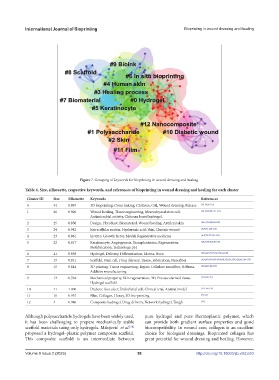
                                   Figure 7. Grouping of keywords for bioprinting in wound dressing and healing.

            Table 4. Size, silhouette, respective keywords, and references of bioprinting in wound dressing and healing for each cluster
             Cluster ID  Size  Silhouette  Keywords                                    References
             0          44    0.897     3D bioprinting, Cross linking, Chitosan, Cell, Wound dressing, Release  [56-59,96-112]
             1          26    0.906     Wound healing, Tissue engineering, Mesenchymal stem cell,   [60-64,95,98,113-121]
                                        Antimicrobial activity, Chitosan based hydrogel,
             2          25    0.850     Design, Fibroblast, Biomaterial, Wound healing, Artificial skin  [24,51,75,80,122-127]
             3          24    0.942     Extracellular matrix, Hyaluronic acid, Skin, Chronic wound  [6,70,71,128-134]
             4          23    0.861     In vitro, Growth factor, Model, Regenerative medicine  [6,47,72-77,135-139]
             5          22    0.917     Keratinocyte, Angiogenesis, Transplantation, Regeneration,   [26,76,78,96,140-143]
                                        Biofabrication, Technology, pH
             6          21    0.938     Hydrogel, Delivery, Differentiation, Matrix, Burn  [50,52,67,77,79-82,99,144-146]
             7          19    0.911     Scaffold, Stem cell, Drug delivery, Tissue, Fabrication, Nanofiber  [6,24,47,56,58,83-85,96,98,115,124,136,141,142,146-155]
             8          15    0.844     3D printing, Tissue engineering, Repair, Cellulose nanofiber, Stiffness,   [25,82,86-88,145]
                                        Additive manufacturing
             9          13    0.764     Mechanical property, Skin regeneration, 3D, Prevascularized tissue,   [27,83,89-91]
                                        Hydrogel scaffold
             10         11    1.000     Diabetic foot ulcer, Endothelial cell, Clinical trial, Animal model  [135,156,157]
             11         10    0.957     Film, Collagen, Honey, 3D bio-printing         [93,94]
             12         4     0.986     Composite hydrogel, Drug delivery, Network hydrogel, Tough  [95]

            Although polysaccharide hydrogels have been widely used,   pure  hydrogel  and pure  thermoplastic  polymer,  which
            it has been challenging to prepare mechanically stable   can  provide  both  gradient  surface  properties  and  good
            scaffold materials using only hydrogels. Milojević  et al.    biocompatibility. In wound care, collagen is an excellent
                                                        [58]
            proposed a hydrogel–plastic polymer composite scaffold.   choice for biological dressings. Bioprinted collagen has
            This composite scaffold is an intermediate between   great potential for wound dressing and healing. However,


            Volume 9 Issue 2 (2023)                         58                       http://doi.org/10.18063/ijb.v9i2.653

