


Page 162 - IJB-9-3
P. 162
International Journal of Bioprinting                                LPBF of AKM/PEEK biological composite


                                                               exhibited  a  smooth  surface  without  hydroxyapatite
                                                               formation. Differently, white precipitates with different
                                                               morphologies appeared on the composite samples
                                                               (schematized  by green  color).  The AKM  content  of  the
                                                               sample had a significant effect on the formation of apatite.
                                                               On the surface of the 5 wt% AKM/PEEK composite, a few
                                                               hydroxyapatite precipitates and aggregates were attached
                                                               to the surface of the sample in small granular form.
                                                               With the increase of AKM content, porous reticulated
                                                               sediments were attached to the composite surface, and the
                                                               covering  density  increased (Figure  10c,  schematized  by
                                                               yellow circle). When the AKM content reached 15 wt%,
                                                               the composite surface formed a synaptic morphology
                                                               accompanied by a completely covered network surface and
                                                               granular blocks (Figure 10d, schematized by green color
                                                               and yellow circle). This proves that the AKMs in the PEEK
                                                               matrix promote hydroxyapatite formation, which suggests
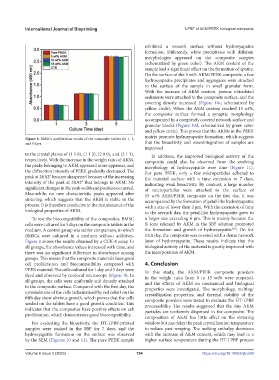
            Figure 8. BMSCs proliferation results of the composite tablets for 1, 3,
            and 5 days.                                        that the bioactivity and osseointegration of samples are
                                                               improved.
            to the crystal planes of (1 1 0), (1 1 3), (2 0 0), and (2 1 1),   In addition, the improved biological activity of the
            respectively. With the increase in the weight ratio of AKM,   composite could also be observed from the evolving
            the peaks belonging to AKM appeared more apparent, and   morphology of hydroxyapatite over time (Figure 11).
            the diffraction intensity of PEEK gradually decreased. The   For pure PEEK, only a few microparticles adhered to
            peak at 28.82° became sharpened because of the increasing   the material surface with a time extension to 7 days,
            intensity of the peak at 28.92° that belongs to AKM. No   indicating weak bioactivity. By contrast, a large number
            significant changes in the peak width and position occurred.   of microparticles were attached to the surface of
            Meanwhile, no new characteristic peaks appeared after   15  wt%  AKM/PEEK  composite  on  the  first  day.  It  was
            sintering, which suggests that the AKM is stable in the   accompanied by the formation of petal-like hydroxyapatite
            process. It is therefore conducive to the maintenance of the   with a size of fewer than 2 μm. With the extension of time
            biological properties of AKM.                      to the seventh day, the petal-like hydroxyapatite grew to
               To test the biocompatibility of the composites, BMSC   a larger size exceeding 6 μm. This is mainly because the
            cells were cultured for 5 days on the composite tablets in the   Si ions released by AKM in the SBF solution promoted
                                                                                                    [48]
            medium. A control group was set for comparison, in which   the formation and growth of hydroxyapatite . On the
            BMSCs were cultured in a medium without additives.   14th day, the composite was covered with a dense network
            Figure 8 shows the results obtained by a CCK-8 assay. In   layer of hydroxyapatite. These results indicate that the
            all groups, the absorbance values increased with time, and   biological activity of the material is greatly improved with
            there was no significant difference in absorbance among   the incorporation of AKM.
            groups. This means that the composite materials have good
            cell proliferation and biocompatibility compared with   4. Conclusion
            PEEK material. The cells cultured for 1 day and 5 days were   In  this  study,  the  AKM/PEEK  composite  powders
            dyed and observed by confocal microscopy (Figure 9). In   in the weight ratio from 0 to 15 wt% were prepared,
            all groups, the cells were uniformly and densely attached   and the effects of AKM on mechanical and biological
            to the composite surface. Compared with the first day, the   properties were investigated. The morphology, melting/
            cytoskeletons of the cells (schematized by red color) on the   crystallization properties, and thermal stability of the
            fifth day show obvious growth, which proves that the cells   composite powders were tested to evaluate the HT-LPBF
            seeded on the tablets have a good growth condition. This   processability.  The  results  suggested  that  the  tiny  AKM
            indicates that the composites have positive effects on cell   particles are uniformly dispersed in the composite. The
            proliferation, which demonstrates good biocompatibility.
                                                               composition of AKM has little effect on the sintering
               For evaluating the bioactivity, the HT-LPBF-printed   window but can delay the peak crystallization temperature
            samples were soaked in the SBF for 7 days, and the   to reduce part warping. The melting enthalpy decreases
            hydroxyapatite formation on  the  surface  was  observed   with the increase of AKM content, which may lead to a
            by the SEM (Figures 10 and 11). The pure PEEK sample   higher surface temperature during the HT-LPBF process

            Volume 9 Issue 3 (2023)                        154                          https://doi.org/10.18063/ijb.699

