


Page 294 - IJB-9-3
P. 294
International Journal of Bioprinting                  3D bioprinting as a prospective therapeutic strategy for LSCD


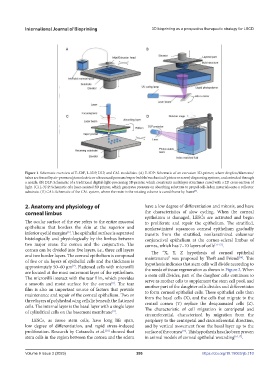
            Figure 1. Schematic overview of E‐3DP, L-3DP, DLP, and CAL modalities. (A) E‐3DP: Schematic of an extrusion 3D‐printer, where droplets/filaments/
            tubes are forced by air-pressure/piezoelectric or ultrasound pressure/vapor bubble/mechanical (piston or screw) dispensing systems, and extruded through
            a nozzle. (B) DLP: Schematic of a traditional digital‐light‐processing 3D printer, which constructs multilayer structures cured with a 2D cross‐section of
            light. (C) L-3DP: Schematic of a laser-assisted 3D printer, which generates pressure on absorbing substrate to propel cell–laden materials onto a collector
            substrate. (D) CAL: Schematic of the CAL system, where the resin in the rotating volume is cured frame by frame .
                                                                                    [5]

            2. Anatomy and physiology of                       have a low degree of differentiation and mitosis, and have
            corneal  limbus                                    the characteristics of slow cycling. When the corneal
                                                               epithelium is damaged, LESCs are activated and begin
            The ocular surface of the eye refers to the entire mucosal   to proliferate and repair the epithelium. The stratified,
            epithelium that borders the skin at  the  superior and   nonkeratinized squamous corneal epithelium gradually
            inferior eyelid margins . The epithelial surface is separated   transits from the stratified, nonkeratinized columnar
                              [6]
            histologically and physiologically by the limbus between   conjunctival epithelium at the cornea-scleral limbus of
            two major areas: the cornea and the conjunctiva. The   cornea, which has 7–10 layers of cells [11-13] .
            cornea can be divided into five layers, i.e., three cell layers   The “X, Y, Z hypothesis of corneal epithelial
            and two border layers. The corneal epithelium is composed   maintenance” was proposed by Thoft and Friend . This
                                                                                                       [14]
            of five or six layers of epithelial cells and the thickness is   hypothesis indicates that stem cells will divide according to
            approximately 50–60 μm . Flattened cells with microvilli   the needs of tissue regeneration as shown in Figure 2. When
                                [7]
            are located at the most outermost layer of the epithelium.   a stem cell divides, part of the daughter cells continues to
            The microvilli interact with the tear film, which provides   serve as mother cells to supplement the stem cell pool, and
            a smooth and moist surface for the cornea . The tear   another part of the daughter cells divides and differentiates
                                                 [8]
            film is also an important source of factors that provide   to form corneal epithelial cells. These epithelial cells then
            maintenance and repair of the corneal epithelium. Two or   form the basal cells (X), and the cells that migrate to the
            three layers of polyhedral wing cells lie beneath the flattened   central cornea (Y) replace the desquamated cells (Z).
            cells. The internal layer is the basal layer with a single layer   The characteristic of cell migration is centripetal and
            of cylindrical cells on the basement membrane .
                                                 [9]
                                                               circumferential, characterized by migration from the
               LESCs, as tissue stem cells, have long life span,   periphery to the centripetal and circumferential direction,
            low degree of differentiation, and rapid stress-induced   and by vertical movement from the basal layer up to the
            proliferation. Research by Cotsarelis et al.  showed that   surface of the cornea . This hypothesis has also been proven
                                              [10]
                                                                               [15]
            stem cells in the region between the cornea and the sclera   in animal models of corneal epithelial wounding [16,17] .

            Volume 9 Issue 3 (2023)                        286                          https://doi.org/10.18063/ijb.710

