


Page 419 - IJB-9-5
P. 419
International Journal of Bioprinting                         3D-printed Mg scaffolds promote bone defect repair


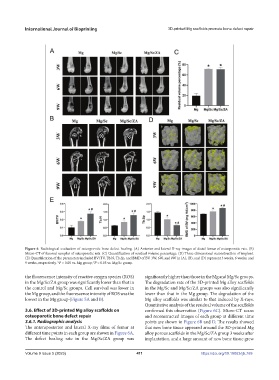
            Figure 6. Radiological evaluation of osteoporotic bone defect healing. (A) Anterior and lateral X-ray images of distal femur of osteoporotic rats. (B)
            Micro-CT of femoral samples of osteoporotic rats. (C) Quantification of residual volume percentage. (D) Three-dimensional reconstruction of implant.
            (E) Quantification of the parameters included BV/TV, Tb.N, Tb.Sp, and BMD of BV. 3W, 6W, and 9W in (A), (B), and (D) represent 3 weeks, 6 weeks, and
            9 weeks, respectively. *P < 0.05 vs. Mg group;  P < 0.05 vs. Mg/Sc group.
                                         #

            the fluorescence intensity of reactive oxygen species (ROS)   significantly higher than those in the Mg and Mg/Sc groups.
            in the Mg/Sc/ZA group was significantly lower than that in   The degradation rate of the 3D-printed Mg alloy scaffolds
            the control and Mg/Sc groups. Cell survival was lower in   in the Mg/Sc and Mg/Sc/ZA groups was also significantly
            the Mg group, and the fluorescence intensity of ROS was the    lower than that in the Mg group. The degradation of the
            lowest in the Mg group (Figure 5A and B).          Mg alloy scaffolds was similar to that induced by X-rays.
                                                               Quantitative analysis of the residual volume of the scaffolds
            3.6. Effect of 3D-printed Mg alloy scaffolds on    confirmed this observation (Figure 6C). Micro-CT scans
            osteoporotic bone defect repair                    and reconstructed images of each group at different time
            3.6.1. Radiographic analysis                       points are shown in Figure 6B and D. The results showed
            The  anteroposterior  and  lateral  X-ray  films  of  femur  at   that new bone tissue appeared around the 3D-printed Mg
            different time points in each group are shown in Figure 6A.   alloy porous scaffolds in the Mg/Sc/ZA group 3 weeks after
            The defect healing rate in the Mg/Sc/ZA group was   implantation, and a large amount of new bone tissue grew


            Volume 9 Issue 5 (2023)                        411                         https://doi.org/10.18063/ijb.769

