


Page 254 - IJB-9-6
P. 254
International Journal of Bioprinting                           3D-Printed GelMA biomaterials in cartilage repair


            Table 1. Modifications of GelMA hydrogels in cartilage tissue engineering
             Materials        Modifications                Aims                  Properties of modification                         Characteristics of GelMA after modifications  In vitro outcomes  In vivo outcomes
             GelMA            Increased concentration or ultraviolet   Improve mechanical properties  N/A                           Controlled stiffness and swelling properties  N/A                N/A
                              (UV) irradiation time
             GelMA            Introduction of oligomer of dopamine   Improve mechanical properties  Good biocompatibility; adhesive property;   Enhanced toughness and resilience; controlled   Promoted chondrocyte adhesion and   Good cartilage repair abilities
                              methacrylate (ODMA)                                tunable property; versatility                      degradation rate; continued protein release  proliferation
             GelMA            Incorporation of polyacrylamide (PAM)  Improve mechanical properties  Biocompatibility; hydrophilicity; controlled   Enhanced compression strength and improved   Good cell adhesion and biocompatibility   Good cartilage repair ability in rabbit knee
                                                                                 mechanical properties; versatility                 elasticity; a favorable degradation rate and sustained  in vitro  cartilage defect model
                                                                                                                                    protein release
             GelMA            Incorporation of thiolated heparin   Improve integration and   Ability to bind to various biomolecules and   Preserved anticoagulation and growth for signaling   Greater cell differentiation and cartilage   N/A
                              (HepSH)                      adhesion              surfaces; biocompatibility; anticoagulant          capacity; promoted cell viability and chondrocyte   matrix deposition in vitro
                                                                                 properties; versatility                            phenotype.
             GelMA with ε-polylysine  Modified Gel-EPL/B hydrogel  Improve integration and   EPL: Interact with negatively charged cell   Improved mechanical properties and better suited   Induction of more ECM and improved   Promoted tissue repair of cartilage defects
             (EPL) and phenylboronic                       adhesion              surfaces and ECM; biocompatibility and             for chondrocyte production        chondrogenesis
             acid (PBA)                                                          antimicrobial properties;
                                                                                 PBA: Binding properties to sugars;
                                                                                 biocompatibility; stability; versatility
             GelMA            Microbial transglutaminase   Seamless integration                                                     A significant increase in adhesive strength  N/A                 N/A
             PEGDA/GelMA      PEGDA                        Promote adhesion and improve  Biocompatibility; versatility; hydrophilicity;   Different adhesion ligand densities and stiffness   N/A    Improved integration and adhesion with in situ
                                                           mechanical properties  photopolymerization; biodegradability             properties                                                       tissues
             GelMA/AGA        Grafted glucosamine molecules onto   Provide an effective approach   Biocompatibility; anti-inflammatory;   More than 87.7% of 15% (w/v) GelMA hydrogel   Better biocompatibility, larger cell   Best integration in in vivo rabbit cartilage repair
                              acrylate groups              of GlcN delivery to a target site    cartilage-building properties       was grafted with AGA              attachment, and higher cell viability
             GelMA            Introduction of tyrosine (Tyr) groups  Improve mechanical properties  Form strong hydrogen bonds      Tyramine binding to proteins in native cartilage   Neocartilage formation from embedded   Improved adhesion to the surrounding tissue,
                                                                                                                                    leads to a 15-fold increment in the adhesive   chondroprogenitor cells is demonstrated   and improved lateral integration of neocartilage
                                                                                                                                    strength of the bioglue compared to pristine GelMA  in vitro
             GelMA/ECM-PFS    Introduction of RGD peptides PFS   Improve integration and   No changes in physical properties        Enhanced mechanical properties; recruitment of   GelMA/ECM-PFS could regulate the   Facilitated recruitment and chondrogenesis of
                              ( peptide sequence PFSSTKT)  adhesion                                                                 BMSCs; improved hyaline cartilage repair in rabbits  migration of rabbit BMSCs  BMSCs, and promoted hyaline cartilage repair
                                                                                                                                                                                                     in rabbit
             GelMA/PLLA       Poly(lactic acid) (PLLA)     Improve printing fidelity and   Biocompatibility; biodegradability;      Fabricated constructs with a compressive stress   Support BMSCs proliferation and   N/A
                                                           mechanical strengths    mechanical strength; versatility; controlled     of ≈150 kPa even after 100 cyclical compression   chondrogenesis
                                                                                 release                                            loading (up to 40% of strain)
             GelMA/PEGDA/CSMA  PEGDA/CSMA                  Adjust mechanical strength                                               Possess suitable compressive elastic modulus and   Provide a 3D support for BMSCs; the   N/A
                                                           and guide chondrogenesis of                                              degradation rate                  differentiation lineage could be changed by
                                                           BMSCs                                                                                                      adjusting the percentage of CSMA


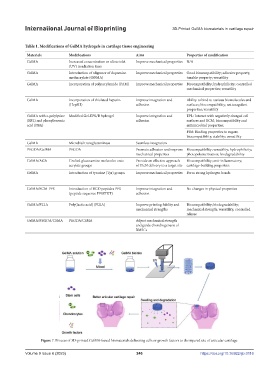
                  Figure 7. Process of 3D-printed GelMA-based biomaterials delivering cells or growth factors to the injured site of articular cartilage.

            Volume 9 Issue 6 (2023)                        246                         https://doi.org/10.36922/ijb.0116

